As an Amazon Associate, we earn from qualifying purchases. Some links on this site are affiliate links at no extra cost to you. Our recommendations are based on thorough research and editorial judgment.


Heated Pet Blankets: Safe Use Guide

Heated pet blankets provide warmth and comfort but require safe usage practices. When selecting a blanket, consider material, size, and safety features, such as thermostatic controls and auto shut-off. Always supervise pets while using these blankets and inspect for wear regularly. Confirm the blanket is machine-washable and suitable for pets with sensitive skin. Consult a veterinarian for specific needs, especially for senior or health-compromised pets. For more guidance on making an informed purchase, explore additional options available.
Key Takeaways
- Choose a heated blanket with safety certifications and features like auto shut-off to prevent overheating and ensure pet safety.
- Opt for materials that are machine-washable, skin-friendly, and suitable for your pet’s size and breed.
- Layer the blanket with regular fabric to regulate heat and position it in a low-traffic area for safety.
- Supervise your pet while using the blanket to monitor comfort and ensure safe usage, especially with health-compromised animals.
- Regularly inspect the blanket for wear and adhere to manufacturer washing instructions to maintain its quality and functionality.
Understanding Temperature Sensitivity in Pets
You may be interested


Understanding temperature sensitivity in pets is crucial for ensuring their comfort and well-being. Pets, particularly dogs, have specialized mechanisms for thermal detection, allowing them to sense heat through the structures in their noses. This ability is influenced by the TRPA1 protein, which helps regulate their response to temperature variations. Age effects notably impact thermal sensitivity, as older animals may demonstrate altered behaviors in temperature-controlled environments. For example, they might prefer different temperatures, reflecting changes in their sensory perception over time. Animal caregivers should be aware of these factors, as understanding how pets respond to heat and cold is essential for providing appropriate care and ensuring a comfortable living environment suitable for their unique needs. Additionally, the material types of heated blankets can significantly influence their warmth and comfort, providing better options for different breeds and age groups.
Choosing the Right Heated Pet Blanket

When considering a heated pet blanket, what factors should be taken into account to guarantee the best choice for a pet’s comfort? Two key aspects are material selection and size options.
- Material Selection: Heated pet blankets vary in fabric, including fleece, microfiber, and water-resistant vinyl. Soft, machine-washable materials promote comfort and easy cleaning. Choosing fabrics that are skin-friendly materials helps ensure the blanket is comfortable for pets with sensitive skin.
- Size Options: It’s important to select an appropriate size blanket based on the pet’s breed and size. Smaller breeds may benefit from compact blankets, while larger pets require larger options for full-body coverage.
Recommended Products
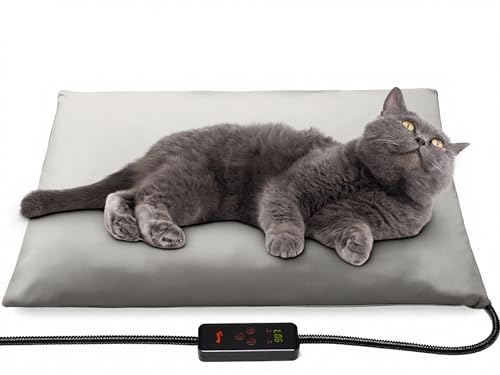
Adjustable Comfort: Features 6 temperature settings (86-131℉/30-55℃) with an LED controller, ensuring a cozy warmth for your pet's preferences.

🐶Upgraded Temperature Adjustable Function: Our pet heating pad has 11 levels of adjustable temperature setting, and 5℉/2.8℃ higher than most other heating pads. Controlling the temperature of electric dog heating pad with the LED controller, it can adjust the temperature easily with 11 temperature settings ( 80-130℉/26.6-54.5℃) to accommodate your pets. It effectively keeps your pets toasty warm in autumn and winter days.

6 Adjustable Temperatures & Timer: Easily customize heating from 86-131℉ to suit your pet's comfort. Auto shut-off (4-24h) for energy saving and safety.
Safety Features to Look For
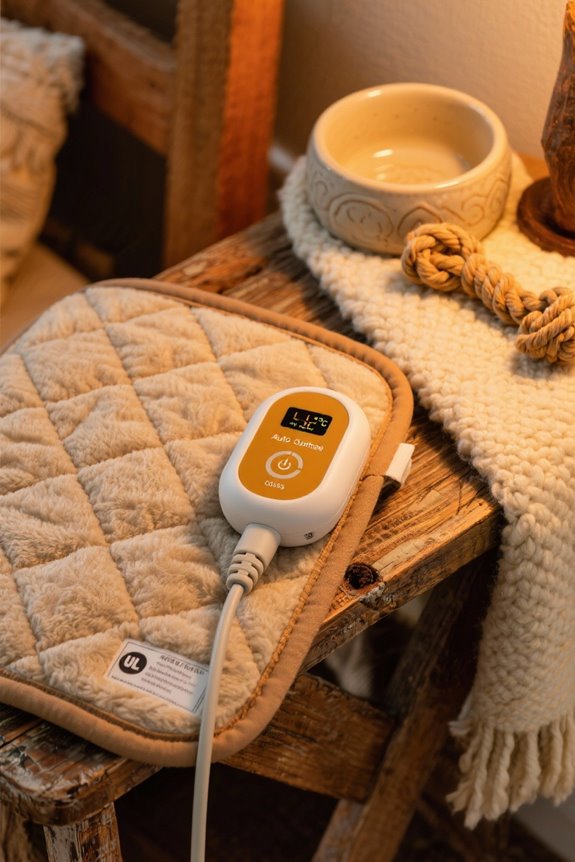
Choosing the right heated pet blanket involves considering various safety features that can protect both pets and homes from potential hazards. Key features include:
- Safety Certifications: Look for blankets with recognized certifications like UL or MET, guaranteeing they meet rigorous safety standards.
- Temperature Control: Thermostatic controls and auto shut-off functions prevent overheating, limiting risks of burns or fires.
- Durability: Choose blankets made from non-toxic, chew-resistant materials. Breathable fabrics help dissipate heat, reducing suffocation hazards.
- Cords: Confirm cords are chew-resistant to avoid electrical safety risks.
- Material and Design: Non-skid bottoms prevent slipping, while quality insulation minimizes heat exposure. Additionally, consider blankets featuring overheat protection to enhance safety during use.
Recommended Products

Rapid Heating & Intelligent Constant Temperature – No More Shivering When Getting into Bed Say goodbye to cold sheets. This blanket features rapid preheating technology that delivers cozy warmth within minutes, while the intelligent constant temperature system maintains your desired heat level throughout the night. No sudden cooling or overheating—just steady, all-night comfort that keeps you from waking up shivering.

【Safe and reliable】: Precautions for use: Avoid excessive bending of wires, avoid entanglement of wires, and avoid using on uneven surfaces.The heating blanket has the recognized authority certification and certification, and has the ing protection function.When you sleep at night, the will automatically trigger the automatic shutdown of the heating,to protect the safety of you and your family.Do not use a damaged power strip or socket,Unplug when not in use.

Worried about safety, limited use, or slow heating? This electric blanket solves it all. Features: fast heating, constant temp control, multi-level heat adjustment, full-body warmth. Ideal for warming beds, relieving fatigue, soothing muscle or menstrual discomfort, keeping elderly or cold-sensitive people cozy. Great for preheating beds, overnight warmth, and relaxing comfort. Beyond daily winter use—against cold, nighttime sleep, bedtime preheating, home relaxation, late-night work—it also suits movie nights, cabin trips, or as a non-electric blanket for camping, BBQs, snow activities. A smart choice for winter prep, holiday gifting, or new homes.
Best Practices for Using Heated Blankets
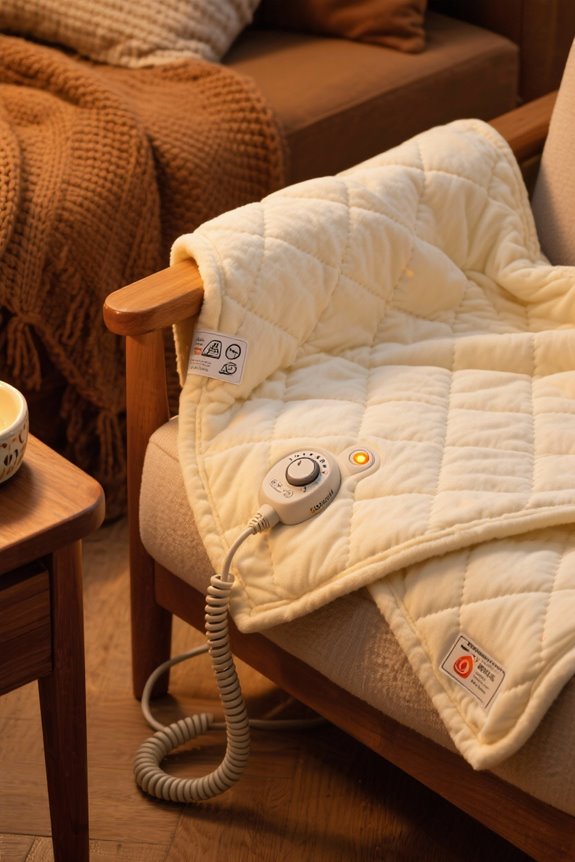
How can pet owners secure the safe and effective use of heated blankets for their furry companions? First, they should set the blanket to the lowest heat setting, as higher levels can risk overheating pets, increasing the chances of burns or heatstroke. Heated blanket layering is vital; adding a regular blanket over the heated one helps buffer the heat. Placing the blanket in low-traffic areas guarantees easy access for pets while avoiding bunching, which can cause uneven heat distribution. Regular inspections of the blanket for wear and damage are essential, as frayed wires can pose hazards. Always supervise pets while using heated blankets, and consider their individual pet heat tolerance to promote ideal comfort and safety. Additionally, pet owners should look for safety features in heated blankets such as auto shut-off timers and overheating protection technology to further enhance safety during use.
Monitoring Your Pet’s Comfort
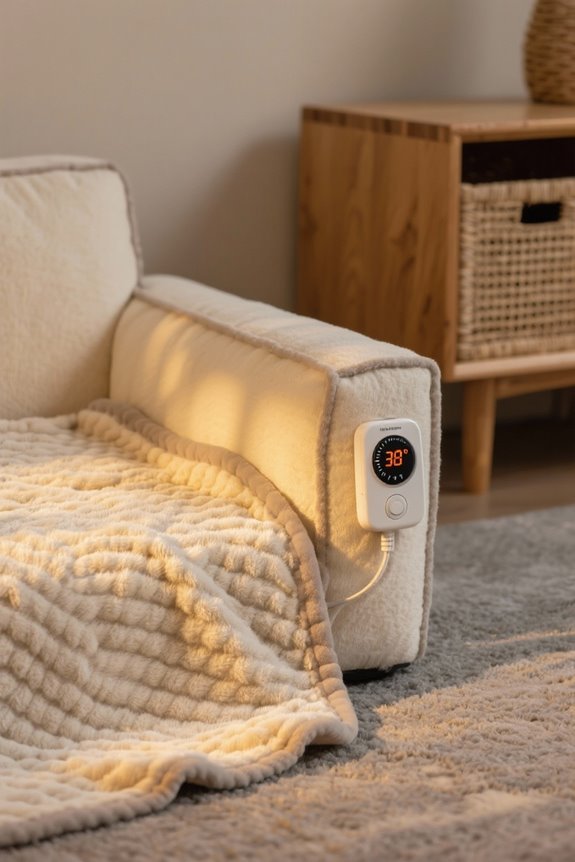
Monitoring a pet’s comfort during the use of heated blankets is critical for their well-being and safety. Regular temperature adjustments are essential, as pets can easily overheat. Here are key considerations for guaranteeing pet comfort:
- Temperature Checks: Frequently monitor the blanket’s temperature and adjust settings to maintain a safe heat level.
- Supervision: Always supervise pets to prevent accidents, such as chewing on cords, and to observe any signs of discomfort like panting or restlessness.
- Heat Distribution: Choose blankets with evenly distributed heat and built-in sensors to minimize hot spots.
- Safe Usage: Position pets to avoid being trapped and guarantee there’s always a plan for emergencies, including having cool water available if needed. Additionally, using blankets with auto shut-off can enhance safety by preventing overheating during unsupervised use.
Maintenance and Regular Inspections
Regular maintenance and inspections of heated pet blankets are essential for guaranteeing both safety and functionality. Implementing effective maintenance techniques promotes the longevity of the blankets. Users should clean the blanket with a damp cloth, avoiding harsh chemicals, and store it in a cool, dry place. Additionally, it’s important to prioritize blankets with auto shut-off features to enhance safety during use.
Inspection routines should focus on checking for any visible damage, such as cracks or tears. Additionally, verify the mat is on a flat surface and plugged into a safety-tested outlet. Regularly inspect the thermostat functionality and cord management to prevent issues. Following these guidelines helps guarantee a safe and comfortable environment for pets, minimizing risks and maximizing the blanket’s effectiveness during use.
Alternative Options for Chewing Pets
Chew Resistant Toys
- Choose durable rubber or nylon chew toys, such as products by Kong.
- Offer hard rubber bones and textured dental chews to satisfy instinctive chewing.
Behavioral Strategies
- Implement crate training to limit access to inappropriate items.
- Use obstacle barriers or baby gates to protect certain areas of the home.
- Employ taste deterrents, like bitter apple sprays, on furniture to discourage chewing.
- Use positive reinforcement to guide pets towards appropriate chewing habits, rewarding them with praise for selecting correct toys. Additionally, consider integrating ergonomic designs into your pet’s environment to support their comfort and well-being.
Recommended Products

COST-EFFECTIVE 3 PACK WITH MULTIPLE OPTIONS: This 3-pack of dog chew toys provides great value for multi-dog households or as convenient replacements; choose 6/9-pack for even better value. These durable dog toys make a perfect gift for your furry friend, ideal as practical chew toys for dogs and long-lasting dog bones.

Built for Long-Lasting Play: Made from tough, high-quality nylon, these dog chew toys stand up to aggressive chewers and won't break apart easily. Whether your dog is relaxing on the couch after a morning walk, gnawing happily in the backyard, or enjoying a quiet moment in the living room, these dog toys let them chew freely. You can feel confident leaving them to enjoy themselves, knowing the toy will hold up, keeping playtime safe, satisfying, and stress-free

[2 Pack Dog ChewToys] Vivid Design with lifelike meat-shaped coloring and surface detailing to entice aggressive chewers. Far more appealing than plain dog bones, help trigger dogs’ natural urge to play and chew.This value 2-pack set is perfect for multi-dog households and can also be used as replacement toys
Benefits for Senior and Health-Compromised Pets
Heated pet blankets offer significant benefits for senior and health-compromised pets, as they provide essential warmth and comfort. These blankets serve as an effective form of heat therapy, helping to soothe arthritic joints and provide joint relief. They are particularly advantageous for pets with poor circulation, as the warmth promotes better blood flow.
Furthermore, heated blankets can enhance the overall quality of life for older pets. By improving muscle relaxation and mobility, they help pets feel more comfortable during colder months. In addition, these blankets create a cozy environment for pets recovering from surgery or illness. Ultimately, heated pet blankets support both physical and emotional well-being, making them a valuable addition to the care of senior and health-compromised pets. Additionally, using heated blankets can contribute to energy-saving purposes, allowing pet owners to maintain a warm environment without excessive energy consumption.
Recommended Products

Give Your Pet Deep, Restful Sleep: Like a heating pad for cats, our small cat bed is engineered with a layer of self-warming material that reflects your pet’s own body heat creating a warm and insulating space

Rapid Cooling Comfort: Keep pets cool with our ZOMISIA Pet Blanket! Blending 80% nylon and 20% Cool Technology PE fabric, its stitched texture boosts airflow, absorbing heat 2x faster (0.4+ Q-max). Ideal for hot days, it offers quick cooling for dogs, cats, or small pets.

SELF HEATED CAT BED TECHNOLOGY: K&H Self-Warming Pet Pad, a self-heating cat pad, uses unique plush material that capture's your pet's body heat and radiates the warmth back to your dog or cat to keep them warm
Making an Informed Purchase Decision
Choosing the right heated pet blanket involves understanding various features and safety measures that can enhance the pet’s comfort and well-being. When evaluating heated blanket options, consider these essential pet safety features:
- Low-voltage design to reduce overheating risks.
- Automatic temperature regulation preventing excessive heat.
- Chew-resistant cords and durable materials to minimize hazards.
- Waterproof or water-resistant materials guarantee hygiene and prevent shorts.
- Non-skid bottoms to prevent slippage and falls.
Additionally, prioritize products with safety certifications, such as MET testing, and automatic power shutoff features. Select blankets with easy-care outer covers and avoid those with exposed cords. Always supervise use and consult a veterinarian for pets with health concerns, guaranteeing the safest choice for your furry friend. Furthermore, ensure the blanket has overheat protection to safeguard against potential hazards during use.
Recommended Products

Warm & Cozy Blanket: Dog blanket is lined with ultra-soft warm sherpa on one side and premium flannel fleece on the other. The waterproof pet blanket blocks dampness and cold, keeping your cats and dogs comfortable and warm.

COOLING DOG CAT BLANKET: Innovative fabric optimize your dog and cats body heat to keep them comfortable all year around. The fabric is fluffy soft with superior silky hand feel. Perfect for small, medium, and large dogs, as well as cats and kittens.

SELF-WARMING: Designed with a heat-reflective batting-backed thermal fabric core, this throw blanket helps keep pets cozy by using their body heat to create a warm sleep surface for dogs and cats to curl up in comfort
Frequently Asked Questions
Can Heated Pet Blankets Cause Heatstroke in Pets?
Heated pet blankets can indeed lead to heatstroke, as they disrupt natural heat regulation. Just as a trapped bird suffers without air, pets, when unchecked, face serious safety risks from excessive warmth, highlighting caution’s importance.
What Should I Do if My Pet Chews the Blanket?
If a pet chews the blanket, disconnect power immediately, inspect for damage, and remove it from reach. Implement supervision tips and chewing prevention measures, such as using cord protectors and offering alternative chew toys.
Are There Specific Breeds That Should Avoid Heated Blankets?
Certain breeds, particularly those with heat sensitivity like Brachycephalic or thick-coated dogs, should avoid heated blankets. Blanket safety is paramount, as these breeds risk overheating or thermal injury without proper supervision and temperature regulation.
How Do Heated Blankets Compare to Standard Pet Beds?
Heated blankets offer higher comfort levels through adjustable warmth, beneficial for pets with special needs. However, standard pet beds are more energy efficient and portable, lacking electrical components but providing adequate insulation for most conditions.
Can Heated Blankets Be Used Outdoors for Pets?
Heated blankets can be used outdoors for pets, provided they prioritize outdoor safety and blanket durability. Manufacturers should guarantee these products are weather-resistant and feature safety mechanisms to prevent overheating and assure reliable warmth in varying conditions.


