As an Amazon Associate, we earn from qualifying purchases. Some links on this site are affiliate links at no extra cost to you. Our recommendations are based on thorough research and editorial judgment.


Clean Candle Wax Spills: Best Methods

To clean candle wax spills effectively, start by evaluating the surface. For hard surfaces, use the freeze method by applying ice, or the heat method with a hairdryer and paper towels. For carpets, gently scrape off excess wax before using absorbent materials. Choosing mild solvents like vinegar helps clean residues safely. Prevent future spills by using stable candle holders and monitoring flames. Following these simple tips can help maintain a tidy environment while preventing damage. More techniques can enhance your cleaning efficiency.
Key Takeaways
- For hard surfaces, use a hairdryer to gently warm wax, then blot with a paper towel to absorb soft wax remnants.
- Apply the freeze method by placing ice on wax, then gently scrape off hardened wax with a spoon or dull knife.
- For wallpaper, scrape excess wax gently with a plastic putty knife and use a warm iron with a paper towel for stubborn stains.
- Always test cleaning solvents in hidden areas first and maintain good ventilation when using stronger solvents.
- Utilize eco-friendly candles and maintain clean wax-free zones to minimize future spills and environmental impact.
Preparation for Cleaning Wax Spills
Preparation is essential for effectively cleaning wax spills, as the right approach can greatly influence the outcome. First, assess the spill environment by identifying the surface type, such as carpet, fabric, or upholstery. This initial step aids in determining suitable preparation techniques.
Next, conduct a wax sensitivity assessment to gauge the material’s fragility; delicate fibers like silk require gentler methods. It’s crucial to consider the extent of the spill, planning the necessary time and effort involved.
Additionally, consider protecting surrounding materials and furniture to prevent further damage. Clear the area for safe application of cleaning tools. Finally, having accessible supplies, such as ice packs and absorbent materials, enhances the efficiency of the cleaning process. Choosing candles with longer burn times may reduce the likelihood of spills, making your candle experience easier to manage.
Removing Wax From Hard Surfaces
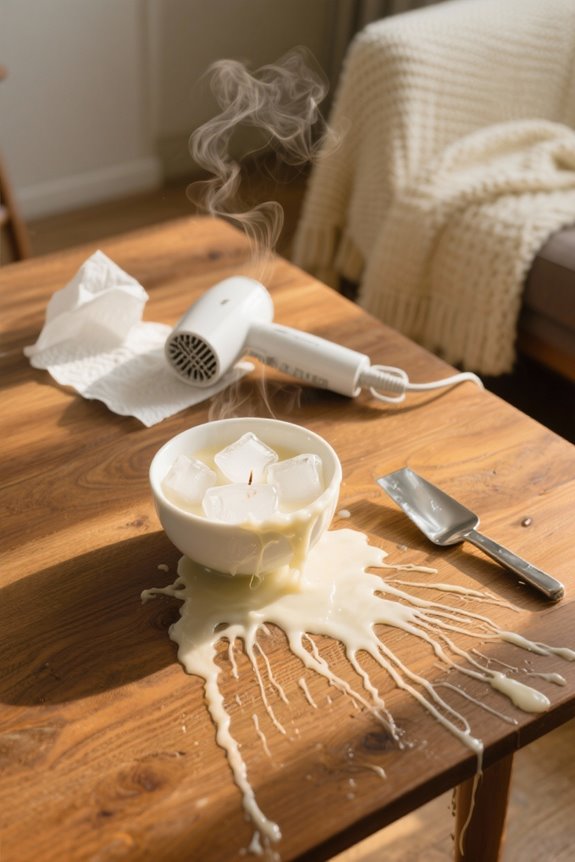
Removing wax from hard surfaces requires a careful approach to guarantee effective cleaning without causing damage. Two primary hard surface techniques include heat application and mechanical removal.
- Heat Application: Use a hairdryer to warm the wax, enabling easier blotting. Always keep the dryer 3 to 6 inches away to avoid scorching. For wood, clean remnants with a diluted vinegar solution. The use of natural wax candles can help prevent future spills, as their cleaner formulations create less mess.
- Mechanical Removal: Employ plastic wax removal tools, such as a putty knife, to gently scrape off hardened wax. This prevents scratching.
For residual wax, mild solvents like isopropyl alcohol can be applied cautiously, ensuring proper ventilation. Following these steps helps maintain the integrity of hard surfaces, preserving their appearance while effectively removing wax.
Using the Freeze Method

The freeze method stands out as an effective technique for removing wax spills, particularly from candle jars and other hard surfaces. To implement this method, first prepare ice or use a freezer. It is essential to freeze the item for a freeze duration of at least 3-5 hours for maximum wax removal effectiveness. After freezing, one can gently pry the wax using a spoon or a dull knife. If any wax remains stuck, returning the jar to the freezer for additional time may help. The frozen wax will usually come out as a single piece. Finally, clean any leftover residue with soap and water, making the jar ready for reuse with minimal effort. Additionally, natural soy wax is known for cleaner burns and can be a preferable choice when selecting candles to minimize spills.
Applying the Heat Method

Applying heat to remove candle wax spills can be an efficient alternative to the freeze method, especially for soft surfaces. The heat application method involves controlled temperature management to soften the wax without damaging the surface underneath.
Tools Needed:
- Hairdryer
- Low-heat iron
- Paper towels or bags
- Soft cloths
Process:
- Place a paper towel over the wax.
- Use a hairdryer or low-heat iron to apply heat.
- Watch for wax to soften, then blot with a cloth.
- Replace the paper as it absorbs wax, repeating until mostly removed.
Precautions:
- Maintain a distance of about 6 inches with the hairdryer.
- Test the method on inconspicuous areas to confirm no damage occurs.
Additionally, be mindful of the natural soy wax used in candles, as it burns cleaner and can affect the ease of cleanup.
Cleaning Wax From Carpet
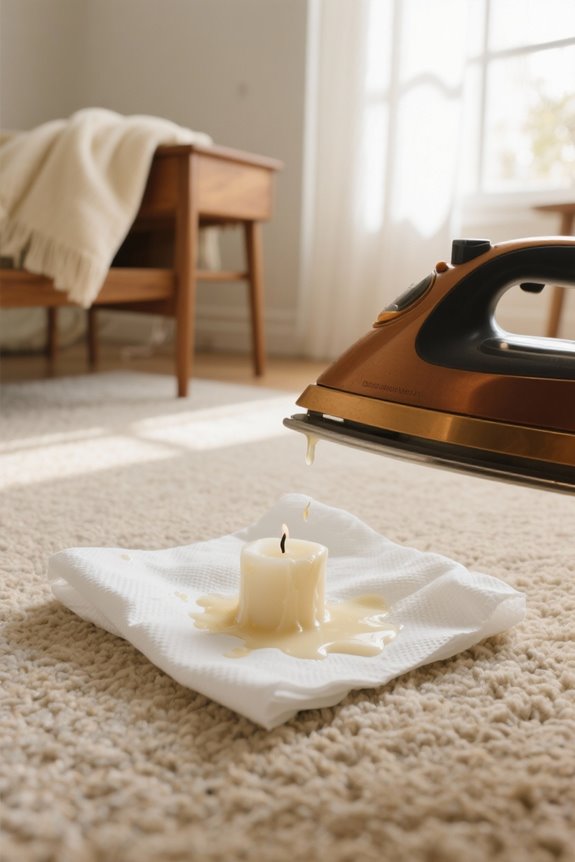
When candle wax spills on carpet, it can create a challenging mess that requires prompt attention. Different carpet types, such as loop-pile or wool, may react differently to wax cleanup.
To remove wax, start with the freezing and scraping technique. Use an ice pack to harden the wax for 10-15 minutes, then gently scrape it with a butter knife. Be cautious to avoid damaging fibers, especially in loop-pile carpets.
Next, attend to any oily residue. Blot using a solution of equal parts white vinegar and water, using only white cloths to prevent dye transfer. For colored wax, follow up with rubbing alcohol on a dry cloth. Additionally, using eco-friendly natural waxes like soy can help ensure a cleaner burn and may reduce the likelihood of spills. Thoroughly vacuum the area to eliminate residual flakes of wax.
Techniques for Wallpaper Wax Removal
Candle wax can also pose a challenge on wallpaper, requiring careful techniques for effective removal. Start by scraping off excess wax gently with a credit card or plastic putty knife to avoid damage. For stubborn stains, using a warm iron over a paper towel can melt the wax, allowing absorption into the paper.
If any residue remains, a warm damp cloth can help clean the area. It’s important to avoid harsh chemicals, as they may damage waterproof wallpaper. Additionally, selecting durable materials can help ensure that your wallpaper withstands the potential damage from wax spills.
Testing any method on an inconspicuous area first is advisable. Additionally, utilizing gentle solvents, like mineral spirits, can further help manage candle wax problems while ensuring safety and preserving wallpaper integrity.
Removing Wax From Wood Surfaces
Removing wax from wood surfaces can be a delicate process that requires attention and patience. First, verify the wax has hardened before attempting removal; soft wax can penetrate deeper into the wood grain. Employing appropriate wax removal tools is essential for success.
- Gentle Mechanical Removal: Use a plastic putty knife or a dull table knife at a 45-degree angle to lift hardened wax, avoiding metal tools that may damage the surface.
- Heat Transfer: Place a cloth over any residual wax and apply a warm iron on low heat.
- Final Touches: For stubborn spots, gently rub with a soft cloth dampened with mineral spirits, always following the grain. Additionally, using gentle mechanical removal can further protect the wood and enhance the effectiveness of your cleaning method.
This method minimizes wax penetration while preserving wood integrity.
Choosing the Right Solvents
Choosing the right solvents is essential for effectively removing wax spills from various surfaces. Different solvents offer varying levels of effectiveness, depending on the material being cleaned.
- Vegetable oil works well for most surfaces; apply it and wipe with a wet cloth.
- Rubbing alcohol or bleach are effective on glass surfaces, while vinegar is versatile for both glass and wood.
- For stubborn stains, Goo Gone or isopropyl alcohol can be beneficial.
- Natural alternatives include plant-based cleaners, which are safer for the environment.
When selecting cleaning supplies, consider those that are made from natural, plant-derived ingredients to ensure you promote eco-friendly practices. Selecting the appropriate solvent not only enhances cleaning efficiency but also maintains surface integrity. Consequently, understanding solvent effectiveness and choosing wisely can prevent future cleaning challenges while promoting sustainable practices.
Preventing Future Wax Spills
Preventing wax spills is crucial for maintaining clean surfaces and ensuring candle safety. Practicing careful candle selection can considerably reduce spill risks. Consider choosing candles with central wicks for even burning and less dripping. Regular wick maintenance is also essential; trimming them to approximately ¼ inch helps avoid excessive wax spillage during use.
In addition, utilizing appropriate placement strategies can prevent spills. Position candles on stable surfaces, away from edges or drafts, to minimize the risk of tipping or uneven melting. Incorporating protective catch trays or mats can further contain potential wax drips, ensuring that cleanup remains manageable. By following these practical measures, individuals can enjoy candle use while safeguarding their surfaces and enhancing overall safety. Also, opting for candles made from natural soy wax can contribute to a cleaner burn, reducing the chance of spills.
Tips for Safe Cleaning Practices
Cleaning candle wax spills can be straightforward when the right techniques are employed. Safety gear is vital for effective cleanup. Using chemical-resistant gloves and goggles protects against splashes during solvent application.
Cleaning Tools:
- A hairdryer can soften wax for easy removal.
- Plastic putty knives are preferred to avoid scratching surfaces.
- Ice cubes harden wax, making it easier to chip off.
Use mild solvents like vinegar for wood and stronger options for glass. Always test solvents on hidden areas first to guarantee no damage occurs. Maintain a well-ventilated space to avoid inhaling any fumes, and keep ignition sources away from flammable solvents. Proper disposal of wax scraps and used cloths is also important for safety. Additionally, choosing premium materials like cotton can enhance durability and make for easier cleanup in the future.
Maintaining Clean Wax-Free Areas
Maintaining clean, wax-free areas around candles requires attention to detail and proactive measures. Establishing wax-free zones is crucial to prevent unsightly spills.
- Use Protective Covers: Always place a protective tray or mat under candles to catch any potential spills.
- Choose Proper Candles: Opt for candles with secure wicks, which minimize excessive melting.
- Monitor Candles: Keep an eye on lit candles to prevent unattended spills.
- Position Carefully: Place candles on stable surfaces and away from flammable materials.
- Avoid Heat Sources: Confirm candles are not too close to heat sources, as this can lead to overheating.
Frequently Asked Questions
How Can I Safely Remove Candle Wax From My Car Interior?
Like a thief in the night, candle wax stains can mar car upholstery. To restore the beauty, gently lift the wax with a soft cloth after employing freezing or warming techniques, ensuring interior surfaces remain unscathed.
What Alternative Tools Can I Use for Scraping Wax?
Alternative tools for scraping wax include plastic putty knives and old credit cards, effectively utilizing scraping techniques. Creative removal hacks, like using frozen items to harden wax, can enhance the scraping process without damage.
Can Candle Wax Stains Be Permanent on Certain Surfaces?
Candle wax stains can be permanent on certain surfaces, particularly porous materials. Wax stain longevity increases with deeper penetration, often resulting in surface damage if not addressed promptly and appropriately during the cleaning process.
What Should I Do if the Wax Spill Is Large?
For large wax spills, effective wax removal techniques involve scraping excess wax, applying heat or cold for easier removal, and ensuring surface protection during the process. Implementing spill prevention strategies can minimize future occurrences.
Are There Eco-Friendly Products for Cleaning Wax Spills?
Eco-friendly products for cleaning wax spills include biodegradable cleaners and natural solvents. These formulations effectively break down wax residues while being safe for surfaces, promoting environmental health, and ensuring household safety during the cleaning process.