As an Amazon Associate, we earn from qualifying purchases. Some links on this site are affiliate links at no extra cost to you. Our recommendations are based on thorough research and editorial judgment.


Heated Seat Cushions: How To Choose

When choosing heated seat cushions, consider various factors for ideal comfort and safety. Evaluate types like portable cushions or vehicle-specific covers. Check the heating performance, ensuring consistent warmth and adjustable settings. Look for safety features such as automatic shut-off and material durability. Assess compatibility with your vehicle’s seats and installation ease. Additionally, explore advanced options for enhanced functionality. These considerations will guide users toward the best choice, leading to a more comfortable experience. Further details are available for informed decisions.
Key Takeaways
- Select a heated seat cushion type that suits your needs, such as universal covers, portable cushions, or heated and ventilated options.
- Check for multiple heat settings and ensure the optimal temperature range is between 78°F and 91°F for comfort.
- Evaluate safety features like automatic shutoff and built-in thermostats to prevent overheating and ensure user safety.
- Consider installation methods to ensure a proper fit, avoiding occupant sensors and ensuring secure attachment to prevent slipping.
- Look for cushions with washable covers for easy maintenance and care, prolonging the product’s usability.
Understanding Heated Seat Cushion Types
You may be interested

10 Best Heated Seat Cushions to Keep You Warm and Cozy This Winter
December 20, 2025

Best Heater For Living Spaces: How To Choose
December 20, 2025

Cozy Reading Nook Ideas With Heated Accessories
December 20, 2025
When selecting a heated seat cushion, it is important to understand the different types available on the market. The main categories include:
- Universal car seat covers: Stretchable, designed for front or rear seats, powered by 12V outlets.
- Standalone portable cushions: Compact pads using USB-A, ideal for outdoor events or travel.
- Heated and ventilated covers: Multi-functional options with various heat settings and memory foam for additional comfort.
- Cover-style seat heaters: Draped over existing seats for broad coverage, with multiple attachment methods.
- Rear-seat-only covers: Targeted for bench seats, warming specific areas for passengers and pets.
When choosing, consider both cushion dimensions and the number of heat settings to guarantee comfort and fit. Additionally, understanding safety features like auto shut-off timers can help ensure a safe and enjoyable heating experience.
Evaluating Heating Performance and Effectiveness
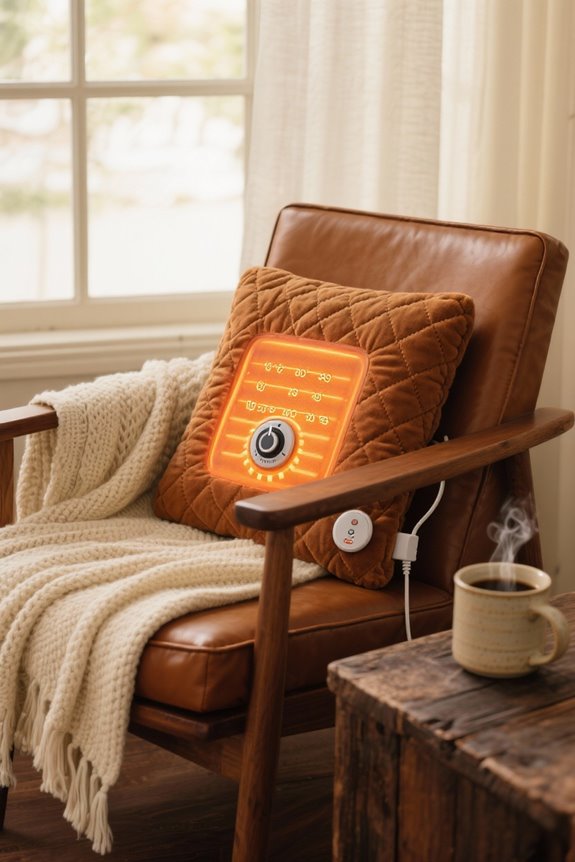
Selecting a heated seat cushion requires examining its heating performance and effectiveness. Key factors to take into account include:
- Heat Distribution: Full-seat cushions provide consistent warmth across the back and bottom, while partial designs may leave areas cold. Higher-end models often support both zones for better comfort.
- Temperature Control: Models typically offer peak temperatures ranging from 82.8°F to 91.1°F. Some provide dual or triple settings for personalized warmth, enhancing adaptability to varying climates.
- Heat-Up Time and Consistency: Quality cushions heat quickly, but their effectiveness relies on the quality of materials and heating elements used.
- Safety Features: Auto shut-off timers can prevent overheating, assuring user safety during extended use. Additionally, effective warmth is achieved with thoughtful heating zone placement, focusing on essential areas for optimal comfort.
Evaluating these elements can help guarantee effective warmth from a heated seat cushion.
Recommended Products

Rapid Warming: TISHIJIE heated seat cushion is outstanding in increasing the temperature quickly within 1min, the heating on back and seat can be turned on simultaneously, providing cozy warmth for your full back, hips and thighs. The highest temperature is able to be adjusted to 60℃(140℉)
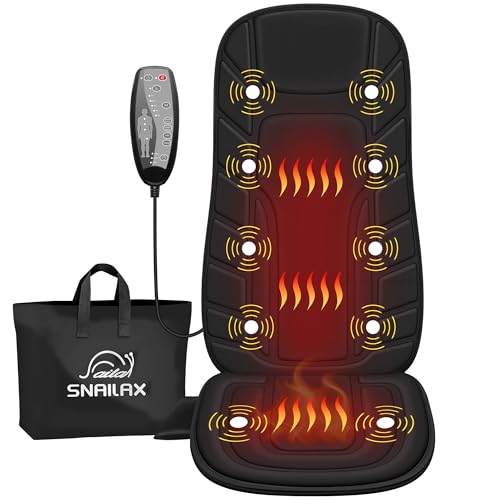
【10 Vibration Motors | Precision Zone Massage】 The Snailax Massage Chair Pad with Heat uses 10 powerful vibration motors (8 on the back, 2 on the seat) specifically targeting the shoulders, back and thighs of the human body, simulating the techniques of a masseur to deeply improve muscle soreness. Choose from 5 professional massage modes (M1 cycle mode, M2 intermittent pulse, M3 zone rotation, M4 wave-like intensity variation, M5 constant vibration) through the ergonomic controller. This massage chair pad has 3 intensity levels, from gentle relaxation to firm tissue massage, to meet different needs according to your preferences.

Comfortable Warmth: This heated seat cushion keeps your back, waist, hips, and thighs warm during cold winter workdays. It not only protects you from the cold but also promotes blood circulation, reduces fatigue, and relieves pain from prolonged sitting.
Installation Methods and Compatibility Considerations
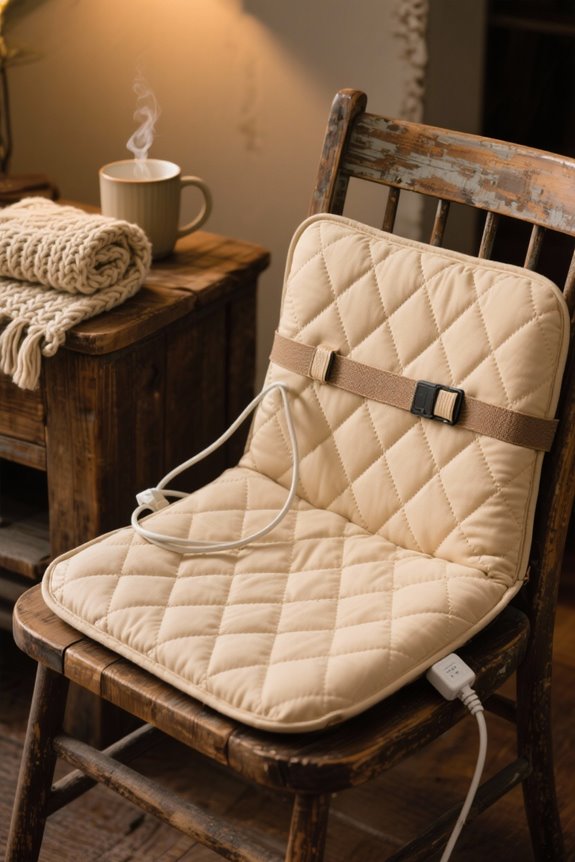
Installing a heated seat cushion requires careful consideration of several methods and compatibility factors. Various installation techniques include placing heating elements directly on the seat foam, rather than on upholstery.
- Use adhesive backing for a smooth fit, guaranteeing no wrinkles form.
- Avoid installing over occupant detection sensors to prevent malfunctions.
- Reattach upholstery using hog rings or cable ties, maintaining fit and avoiding damage to heating pads.
Compatibility factors are essential as well. Confirm that heating elements match the seat type, considering foam thickness and sensor positions. Universal pads have limitations, often not allowing trimming, restricting their adaptability. Moreover, modifications may be necessary to guarantee proper fitting without creating uneven surfaces, promoting comfort and functionality. Additionally, ensure that heating pads incorporate safety mechanisms to prevent overheating, similar to features found in heated mattress toppers.
Recommended Products

Full Back & Seat Vibration Massage: Experience soothing relaxation with 6 powerful vibration massage motors targeting the upper back, lower back, hips and thighs. Choose from 6 massage modes to customize your comfort. (This is a vibration massage cushion, NOT a shiatsu kneading massager.)

Comfortable Warmth: This heated seat cushion keeps your back, waist, hips, and thighs warm during cold winter workdays. It not only protects you from the cold but also promotes blood circulation, reduces fatigue, and relieves pain from prolonged sitting.

Innovative Ventilation Seat Cushion: This seat cushion for desk chair is designed to provide innovative comfort through a heat dissipation system consisting of 30 air holes and 11 ventilated grooves. Even if you have to sit for a long time, this cushion can help prevent stuffiness
Importance of Safety Features
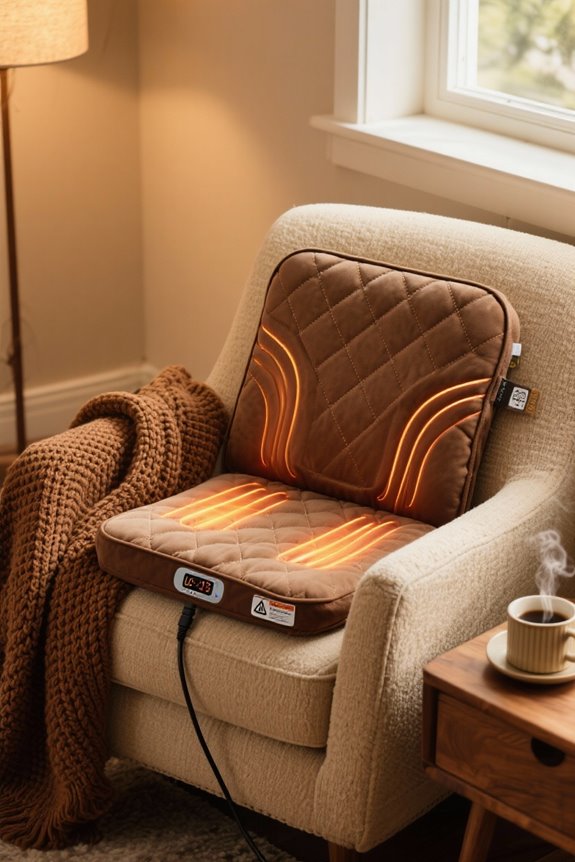
The importance of safety features in heated seat cushions cannot be overstated, as they play a crucial role in user protection and comfort.
Key safety features include:
- Thermostats: Built-in mechanisms prevent overheating, which can cause burns or damage. Products lacking this feature raise significant safety concerns.
- Automatic Shut-Off: This feature turns off heat after a specific time, reducing risks for users, especially the elderly.
- Materials: Fire-resistant and breathable fabrics help control temperature and minimize risks.
- Non-Slip Design: Secure attachment prevents the cushion from shifting, which can lead to uneven heating.
- Certifications: Verification of safety standards, such as UL certification, indicates thorough testing for user safety.
Considering these features guarantees better heat regulation and overall product reliability, promoting a safer experience. In addition, choosing products with proven safety features can enhance peace of mind during use.
Recommended Products
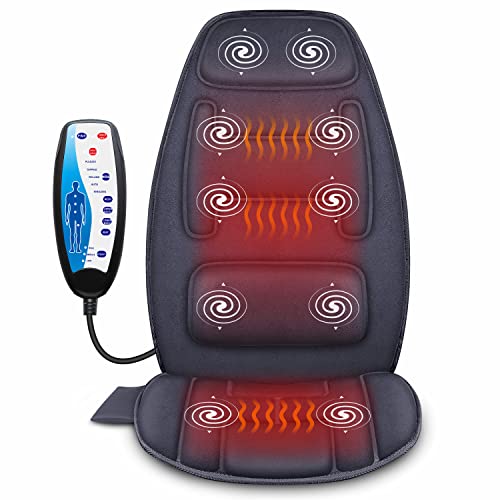
Note: This massage chair pad is a vibrating massager only, not a shiatsu massager with roller balls. Extra Memory Foam Support Pad – The massage seat cushion is designed with soft and comfortable memory foam in neck rest and lumbar support pads, provides you with superior comfort and great pressure relief.

Relaxing 6-Motor Vibration Massage for Everyday Comfort: Whether you're working, reading, or simply taking a break, this massage seat cushion uses 6 vibration motors to deliver soothing comfort across your shoulders, back, waist, and thighs. Designed as a practical back massager for chair, it helps make everyday sitting more relaxing at home or in the office.

【2 Heat Levels & 3 Vibration Modes for Lumbar Comfort】This lumbar support pillow features 2 adjustable heat levels (113°F & 131°F) and 3 vibration modes powered by 2 vibration motors to help relax your lower back during long hours of sitting. Heat and vibration can be used independently or together, making this back support pillow ideal for home, office, or travel.
Material Choices and Durability
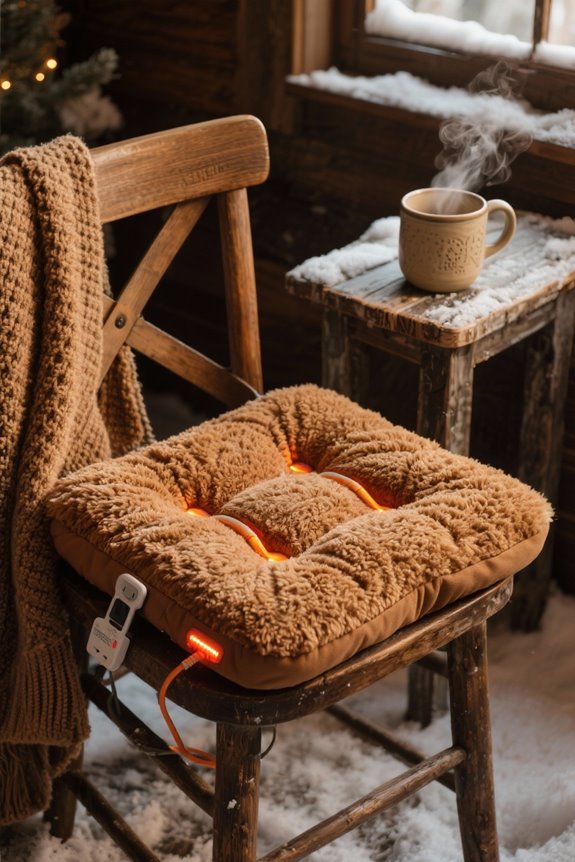
Choosing the right materials for heated seat cushions greatly impacts both comfort and longevity. There are several material types to take into account:
- Graphene: Offers rapid heat-up and high heat retention, ideal for premium cushions.
- Polyester: An economical option, it allows efficient heat transfer but may lack luxury.
- Neoprene: Known for durability and water resistance, but it can slow down warmth.
- Perforated Eco-Leather: Provides a stylish appearance and enhances heat distribution.
- Mesh: Highly porous, it allows maximum heat transfer, providing quick warmth.
Durability is essential; polyester may fade, while neoprene withstands heavy use. Eco-leather combines a premium feel with resistance to scuffs. Ultimately, the choice of material impacts both comfort level and the cushion’s lifespan in various conditions.
Cost Considerations and Value Assessment
When selecting a heated seat cushion, various cost considerations play an essential role in ensuring value. Consumers should evaluate several price ranges. Entry-level cushions are available for approximately $8.87, but they often lack features and durability. Mid-range options, costing between $28.99 and $49.95, usually offer adjustable settings and basic safety features, representing good cost efficiency. Premium models, priced from $75.99 to over $160, may include advanced features, ergonomic designs, and heightened safety, appealing to those prioritizing long-term use. Discounts, often reaching 30–50%, can enhance value across these ranges. Ultimately, understanding the balance between cost and features is vital to selecting the best value for individual needs. Additionally, several cushions boast multiple temperature settings, which can further justify the investment based on personal comfort preferences.
User Reviews and Satisfaction Levels
User reviews of heated seat cushions reveal a range of satisfaction levels, reflecting various user preferences and needs. User feedback highlights essential factors impacting the overall experience:
- Comfort Assessments: Most reviews praise the comfort provided by soft materials and ergonomic design, enhancing long-term use.
- Warmth Ratings: Users appreciate quick heating and customizable temperature controls, ensuring ideal warmth during cold seasons.
- Durability Concerns: Some critiques focus on the longevity of electrical components, especially in budget models.
- Satisfaction Ratings: Positive experiences are often linked to effective warmth retention and user-friendly designs, while negative feedback can stem from poor fit or ineffective massage features. Many buyers also emphasize the importance of safety features to prevent overheating, which can significantly enhance user peace of mind.
Understanding these elements can help potential buyers select a heated seat cushion that meets their satisfaction needs effectively.
Power Consumption and Battery Life Impact
How does power consumption affect the battery life and usability of heated seat cushions? The power draw of heated seat cushions varies from 12W to 48W, impacting battery runtime.
- Low-Power Models (12W): These cushions are suitable for longer use, with a smaller battery capacity.
- Mid-Range Units (24W to 30W): They balance comfort and battery life, operating around 3 to 3.5 hours on a 70Wh battery.
- High Power Models (up to 48W): These units warm quickly but considerably reduce battery runtime, necessitating larger batteries for extended use.
Ultimately, the selected model’s power consumption affects overall usability, especially for outdoor activities or long trips in electric vehicles. Additionally, consumers may find that choosing blankets with multiple heat settings can enhance comfort during usage. Consumers should consider battery capacity to match power draw for ideal performance.
Features to Look for in Advanced Models
Choosing an advanced heated seat cushion involves understanding various features that enhance comfort and safety. Key elements to take into account include:
- Heating Technology: Look for cushions made with advanced heating elements, like copper nickel alloy, ensuring even heat distribution.
- Temperature Control: Multiple heat settings allow users to customize warmth levels, often facilitated by advanced controllers.
- Smart Sensing: Some cushions include technology that adjusts temperature based on body heat, promoting ideal comfort and preventing overheating.
- Safety Features: Auto-shutoff mechanisms enhance safety, activating after 30 to 50 minutes of use.
- Material Quality: High-density foam combined with luxurious fabrics improves both comfort and durability. Many heated cushions also offer multiple temperature settings for versatile warmth, similar to heated blankets.
Understanding these features will help guide users towards a well-designed seat cushion suited to their needs.
Recommended Products

More Breathable: Crafted from mesh fabric, our car seat cushion boosts air circulation to reduce sweat buildup in daily indoor or normal temperature environments (20-28℃). Ideal for summer, it minimizes heat and moisture even during long drives, preventing the burning feel on leather seats in midday heat. Note: Breathability is affected by scenarios—for high temperatures (above 30℃) or high humidity (e.g., outdoor exposure, strenuous exercise), loose clothing is recommended for better experience

Ultimate Plush Comfort Cover: Indulge in luxurious softness with 99.9% Short Plush Fabric. Featuring an Extra-Thick material, this Soft massage chair pad offers a soothing massage experience throughout your back and thighs.
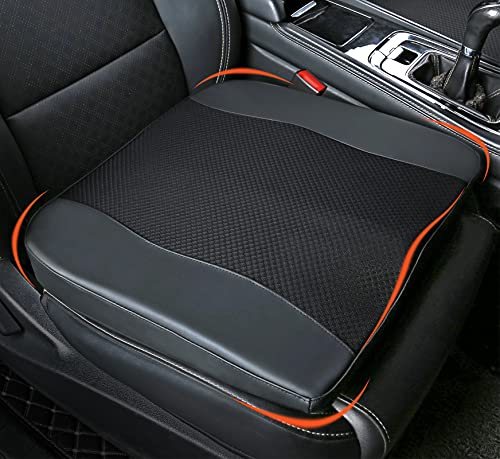
COMPLETE COMFORT — We shaped our seat cushion for car seat driving using a ‘W’ shape, an ergonomically considered design to promote correct driving posture and relieve the pains of sitting over long periods
Comparing Portable vs. Vehicle-Specific Options
When considering the differences between portable and vehicle-specific heated seat options, various factors come into play.
Portable Heated Seat Cushions
- Offer universal fit for cars, trucks, and chairs.
- Powered by a 12-volt lighter, battery pack, or household outlet.
- Provide portable flexibility, allowing easy transfer between vehicles.
Vehicle-Specific Heated Seat Covers
- Designed for a custom fit over specific seat models.
- Often require more complex installation, especially if hardwired.
- Provide thorough coverage, heating both the seat bottom and backrest.
While portable cushions focus on the seat bottom, vehicle-specific options guarantee a snug fit and consistent warmth. Ultimately, the choice depends on individual needs, such as adaptability for different vehicles versus a more permanent solution for dedicated cars. Investing in quality heated accessories can significantly enhance overall comfort during cold weather.
Recommended Products

Thick Padding and Extra Wide Seat: This heated stadium cushion has thick pad that consists of two foams. The first foam is soft enough to keep you comfy when sitting on it. The second hard foam can give you enough support. And it is 20.08 inch width, which also makes it suitable for people big enough

❄ high quality - The seat cushion is designed with memory foam and pearl cotton, which is soft, comfortable and not easy to deform. It is worth having for you/your lover in the cold winter!If you don’t use this pad outside, it can also be used as a heated cat pad/heated pet pad for your pet. It is a practical household item!

Heated Stadium Seats for Bleachers: Our portable heated stadium seats is made of waterproof 600D Oxford cloth and soft skin-friendly suede stitching, filled with thick pearl cotton and memory cotton for excellent comfort
Maintaining and Caring for Heated Seat Cushions
Maintaining and caring for heated seat cushions is essential to guarantee their longevity and peak performance. Proper cleaning methods are key; users should remove the battery before hand washing the cushion with mild detergents. It is important to allow the cushion to dry flat to avoid damage. Avoid using bleach and abrasive cleaners that may harm the product.
For storage tips, keep the cushions in a secure place, away from sharp objects and excessive heat, to prevent wear and tear. Additionally, care for the power cord by avoiding twisting or wrapping it tightly around the product. Following these guidelines will help sustain the functionality and safety of heated seat cushions over time. Moreover, proper maintenance is crucial for optimizing performance and extending the lifespan of any heated device.
Key Takeaways for Your Purchase Decision
A thoughtful approach to selecting heated seat cushions can greatly enhance comfort on colder days. First, consider comfort preferences by exploring various heat settings—low, medium, and high—to find the right warmth level. Additionally, check the heating performance, confirming it reaches comfortable temperatures between 78°F and 91°F.
Next, remember maintenance tips. Look for cushions with washable covers to ease cleaning. Evaluate safety features, like automatic shutoff timers, which prevent overheating and save energy.
Lastly, assess the installation simplicity and fit, confirming the cushion secures firmly to avoid slipping. Taking these factors into account will help guarantee a satisfying purchase and improved comfort during chilly weather.
Frequently Asked Questions
Can Heated Seat Cushions Be Used in Non-Automotive Settings?
Heated seat cushions can indeed find their way into various non-automotive settings. From enhancing comfort in a home office to providing warmth during outdoor events, they effortlessly blend functionality with versatility.
Are Heated Seat Cushions Safe for Pets?
Heated seat cushions are not safe for pets due to overheating risks. Proper heated safety measures and pet comfort considerations must guide product selection, ensuring their specific needs are met with appropriate, controlled heating designed for animal use.
How Do Heated Seat Cushions Affect Seat Upholstery?
Heated seat cushions, like warm embraces, can dramatically influence seat upholstery. Their effectiveness hinges on seat materials, as improper choices may lead to inadequate heat retention and potential damage, transforming comfort into a worry instead of a delight.
Do Heated Seat Cushions Require Special Cleaning Methods?
Heated seat cushions do require special cleaning methods. Cleaning precautions must be observed based on fabric compatibility to prevent damage, ensuring safe removal of dirt without harming electrical components or voiding warranties through improper cleaning techniques.
What Is the Expected Lifespan of a Heated Seat Cushion?
The expected lifespan of a heated seat cushion resembles a candle’s flicker, often lasting several seasons. Proper product maintenance and a lifetime warranty can greatly enhance durability, safeguarding against the wear and tear of everyday use.


