As an Amazon Associate, we earn from qualifying purchases. Some links on this site are affiliate links at no extra cost to you. Our recommendations are based on thorough research and editorial judgment.

Humidifier Filters: Install And Use

Humidifier filters are essential for maintaining air quality and appliance function. Proper installation involves turning off power, shutting off water supply, and following the manufacturer’s instructions. Filters should be replaced regularly: every 5 to 7 weeks for portable models and annually for whole-house systems. Signs of replacement include hardened filters and decreased humidity. Regular maintenance enhances performance, controls odors, and reduces health risks. Understanding different models and their specific needs is important, along with essential troubleshooting tips. Further insights await on optimizing use and care.
Key Takeaways
- Identify the correct type of filter for your humidifier model to ensure proper compatibility and performance.
- Follow manufacturer instructions for installation, noting the filter orientation to avoid mistakes.
- Replace portable humidifier filters every 5 to 7 weeks and whole-house filters annually for optimal function.
- Regularly clean filters to prevent blockages and monitor for signs of wear, like discoloration or reduced humidity.
- Maintain the humidifier’s efficiency by using distilled water to minimize mineral buildup and extend filter life.
Understanding Humidifier Filters
You may be interested
10 Best Console Humidifiers for Optimal Comfort and Air Quality
December 2, 2025

Humidifier filters play an important role in maintaining indoor air quality and comfort. Understanding the different types aids in effective usage.
- Wick Filters: Common in cool mist humidifiers, they absorb water and help generate mist.
- Activated Carbon Filters: Often paired with other filters, they effectively reduce odors and enhance air quality.
- Whole House Differences: Whole-house humidifier filters, like Aprilaire Water Panels, cater to larger systems to maintain consistent humidity levels across a home.
- Honeywell Features: Renowned for their efficiency, Honeywell filters can remove up to 99% of mold and bacteria.
Additionally, filter compatibility with specific humidifier models guarantees optimal performance. Regular maintenance, including timely replacements, is crucial for extending the lifespan and effectiveness of these important components. Ensuring that humidity levels remain within 30%-50% is vital for preventing mold growth and maintaining a healthy environment.
Recommended Products

𝗣𝗘𝗥𝗙𝗘𝗖𝗧 𝗖𝗢𝗠𝗣𝗔𝗧𝗜𝗕𝗜𝗟𝗜𝗧𝗬: Our Humidifier Wicking Replacement Filter Compatible with Canopy Bedside Humidifier ONLY. Ensuring a seamless fit and optimal performance.

4 Piece Value Pack - 4 premium humidifiers filters for your Honeywell HAC-504, HAC-504AW, and HAC-504V1 humidifier filters. Made from high-quality, durable material with an optimized filter design to maximize your compatible Honeywell HCM 350 filter moisture output
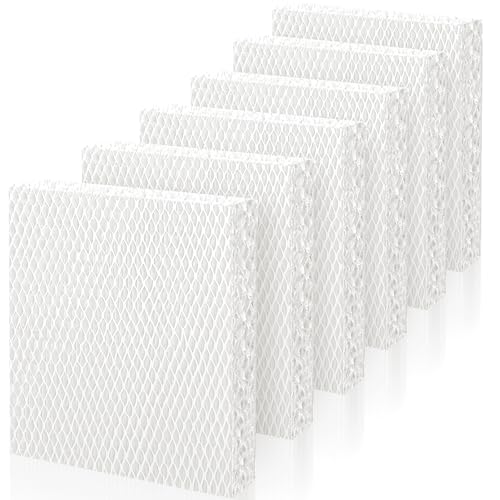
FIT MODELS-These HFT600 humidifier wicking filters T for Honeywell HFT600T HFT600PDQ Filter. Compatible with HFT600 Series HEV-600 Series: HEV615, HEV615B, HEV615W, HEV620, HEV620B, HEV620W, HEV-615, HEV-615B, HEV-615W, HEV-620, HEV-620B, HEV-620W.
Proper Installation Steps
Before installing a new humidifier filter, it is important to prepare properly for the task. First, turn off the power at the furnace or breaker panel. Next, locate the humidifier unit, typically beside the furnace, and shut off the water supply if applicable. Gather necessary tools, such as screwdrivers, to open the unit’s housing panel.
When removing the old filter, note its orientation for accurate installation of the new one. Align the new filter according to the manufacturer’s instructions, ensuring the proper filter orientation is followed. Securely fit the filter into place and reconnect any water lines. Finally, reassemble the humidifier, check for gaps, and restore power to the unit to complete the installation process. To ensure optimal performance, consider using a filter made from eco-friendly materials as they promote sustainability and enhance air quality.
Recommended Products

BUY WITH CONFIDENCE This genuine replacement water panel was designed and manufactured in the USA by AprilAire, the leader in indoor air quality solutions, to optimize the performance of your AprilAire Humidifier Models: 300, 350, 360, 560, 560A, 568, 600, 600A, 600M, 700, 700A, 700M, 760, 760A, 768

BUY WITH CONFIDENCE This genuine replacement water panel was designed and manufactured in the USA by AprilAire – the leader in indoor air quality solutions to optimize the performance of your AprilAire Humidifier Models: 300, 350, 360, 560, 560A, 568, 600, 600A, 600M, 700, 700A, 700M, 760, 760A, 768

𝙏𝙧𝙪𝙨𝙩 𝙇𝙀𝙑𝙊𝙄𝙏 𝙂𝙚𝙣𝙪𝙞𝙣𝙚 𝘼𝙘𝙘𝙚𝙨𝙨𝙤𝙧𝙮: Choose genuine LEVOIT accessory not only protect your humidifier, but also ensure what you're buying is worthy of your investment.
Replacement Frequency and Signs
Maintaining a humidifier filter is essential for peak performance and indoor air quality. Filters for portable humidifiers should be replaced every 5 to 7 weeks, while whole-house filters typically need changing once a year. For larger portable humidifiers, seasonal changes, about four times annually, are advisable.
Indicators that a filter needs changing include:
- Hardened or discolored filters.
- Decreased indoor humidity levels.
- Mold or mildew presence around the unit.
- Physical symptoms, such as dry skin or chapped lips.
- Visible mineral deposits, often from hard water.
Usage frequency and environmental factors may also affect filter lifespan. Heavier usage, dust, and pets can increase the need for timely replacement to guarantee peak humidifier function. Additionally, regular maintenance is crucial to ensuring devices operate efficiently and enhance overall indoor air quality.
Recommended Products
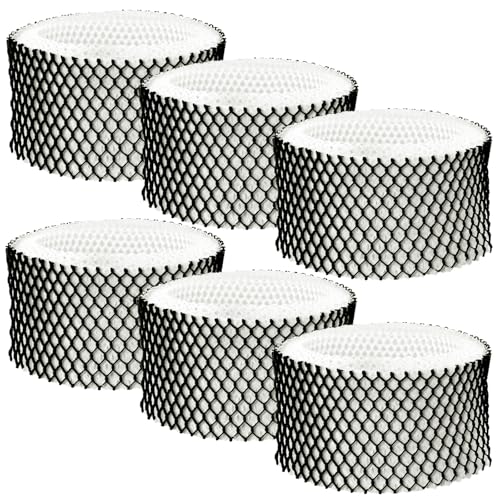
FIT MODELS-These HWF62 humidifier wicking filters A for Holmes Modes: HF212, HLS140, HLS1300, HLS1400, HM1100, HM1118, HM1119, HM1120, HM1230, HM1245,HM1275, HM1280, HM1281, HM1285, HM1290, HM1295, HM1296, HM1297, HM1300, HM1450, HM1700, HM1701, HM1740, HM1760, HM1761, HM1845, HM1855, HM1888, HM1910, HM1975, HM2005, HM2025, HM2030, HM2059, HM2408, HM2409, HM3000, HM3800, HM3850, HM4000

【COMPATIBLE MODELS】Wf813 humudifier filter replacement for Equate Relion WF813, DH830 DH-830, DH832 DH-832, RCM832 RCM-832, RCM832N RCM-832N; for Equate EQ-2119-UL,EQWF813; ProCare AC813, PCCM-832N, PCWF813 PCWF813-24; Robitusin DH-832; Duracraft DH-830;Protec WF813 WF-813
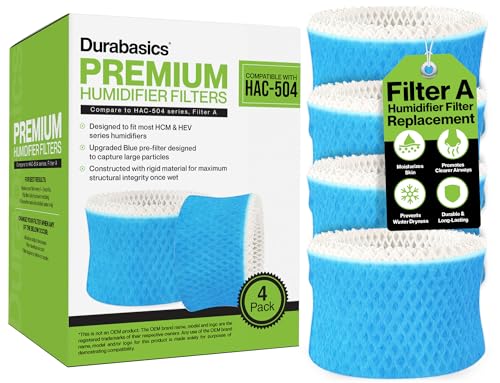
4 Piece Value Pack - 4 filters compatible with Honeywell replacement wicking Filter A for your Honeywell HAC-504, HAC-504AW, and HAC-504V1 humidifier filters. Made from high-quality, durable material with an optimized filter design to maximize your compatible Honeywell HCM 350 filter moisture output
Importance of Regular Maintenance
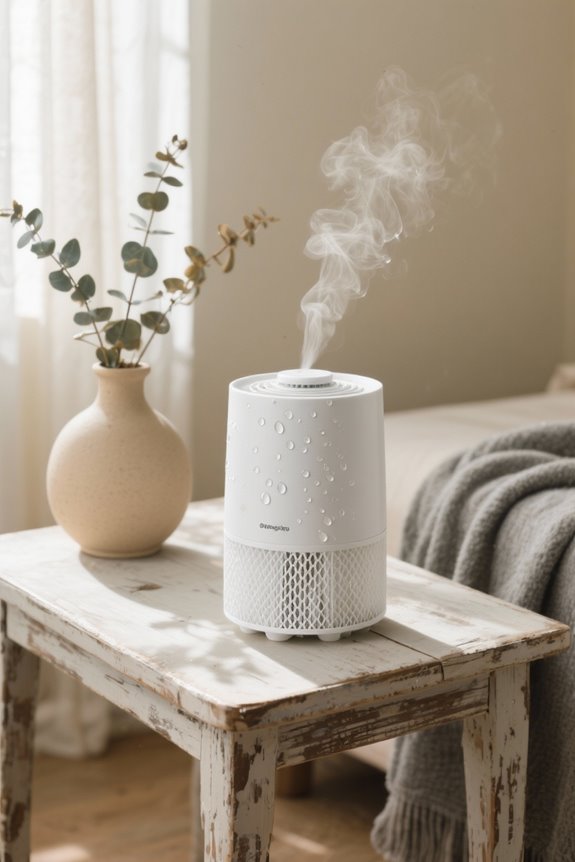
Regular maintenance of humidifiers is vital for ensuring ideal performance and enhancing indoor air quality. Without proper upkeep, mold and mildew can thrive, leading to significant health implications, including respiratory issues and allergies.
- Benefits of regular maintenance include:
- Maintaining optimal humidity balance, which alleviates dry skin and irritated sinuses.
- Preventing the circulation of airborne irritants that can compromise air quality.
- Avoiding unpleasant odors, contributing to a more comfortable indoor environment.
- Identifying minor issues before they require costly repairs, thereby extending the humidifier’s lifespan. Proper maintenance also ensures that the humidifier operates efficiently and reduces energy usage, ultimately saving on utility costs.
Specific Considerations for Different Models
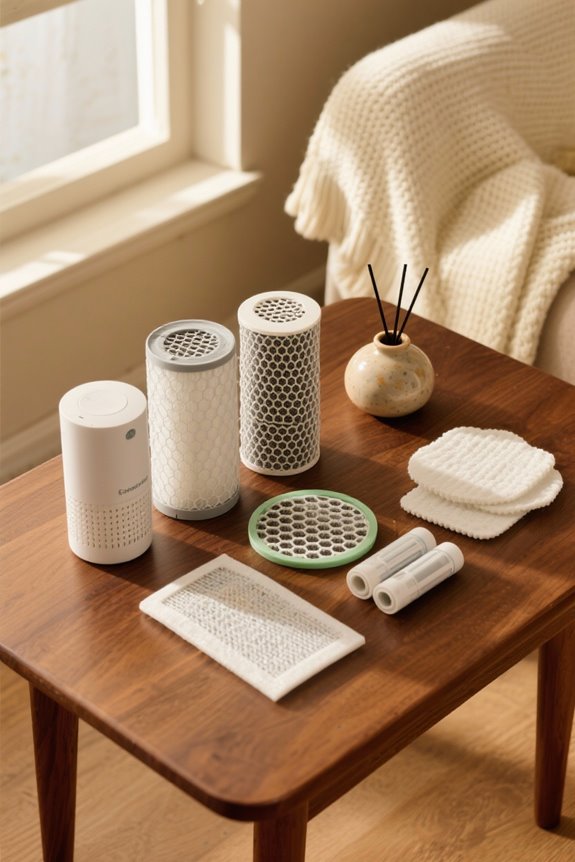
Understanding the specific considerations for different humidifier models is vital for optimum use and maintenance. Each model requires attention to filter types and model compatibility for effective operation.
- Evaporative Humidifiers: Use evaporative pads that should be cleaned often.
- Whole-House Models: These often employ water panels needing replacement every 6 to 12 months.
- Unique Designs: Brands like Levoit often have non-standard filters, requiring check-ups for compatibility.
- General Filters: Models such as GENERALAire need specific filters tailored to their setup.
Before replacing any filter, always verify the correct orientation and securely reassemble the unit. Following these guidelines not only extends the humidifier’s lifespan but also enhances air quality, making these considerations vital. Additionally, selecting a model with a smart humidistat can help maintain optimal humidity levels without constant adjustments.
Recommended Products

Humidifier Replacement Filter Compatible with LEVOIT ultrasonic humidifiers - Classic160 / Dual 200S / Dual 150 / Classic 300 / Classic 300S / OasisMist450S / LV600S / LV600HH / OasisMist600S / Superior 6000S model series. ※Please confirm your humidifier model before purchase.

Compatible Models:Compatible with Canopy Bedside and Nursery Humidifier.Pack includes 4 premium humidifier filters

FIT MODELS – 6 pack upgraded HFT600 humidifier filters t for Honeywell HFT600 Series, HEV-600 Series. Compatible with Honeywell HEV615, HEV615B, HEV615W, HEV620, HEV620B, HEV620W, HEV-615, HEV-615B, HEV-615W, HEV-620, HEV-620B, HEV-620W. Compare to part # HFT600T & HFT600PDQ & HFT600PF1.
Troubleshooting Tips
Experiencing issues with a humidifier can be frustrating, yet identifying and resolving problems can often return the unit to peak performance.
Power Supply Issues
- Check the circuit breaker or fuse box for tripped circuits.
- Inspect the power cord for damage, ensuring it’s securely plugged in.
Water Supply Problems
- Confirm the water tank is filled adequately.
- Look for leaks or kinks in the supply line obstructing flow.
Filter Maintenance
- Clean filters regularly to avoid airflow restrictions.
- Replace filters when they are discolored or damaged.
Common Issues
- Mineral buildup can affect mist production.
- Persistent clogging despite cleaning may require part replacement.
Addressing these common issues will help maintain proper humidifier function and extend its lifespan. Additionally, using distilled water can significantly reduce mineral deposits in your humidifier, leading to improved performance and longevity.
Enhancing Indoor Air Quality
How can humidifier filters greatly enhance indoor air quality? Humidifier filters play an essential role in filter effectiveness, capturing dust, allergens, and microbial contaminants. These filters considerably lower indoor air pollutants, such as particulate matter (PM2.5), improving respiratory health.
- Regular filter replacement prevents mold and bacteria growth, further ensuring air pollutant reduction.
- Maintaining ideal humidity levels minimizes airborne viruses and bacteria transmission.
- With enhanced filtration technology, pollutants like formaldehyde and volatile organic compounds (VOCs) can be effectively filtered out. Additionally, optimal noise levels are maintained in quieter environments by using well-functioning filters, contributing to a more comfortable atmosphere.
Frequently Asked Questions
Can I Use Any Filter in My Humidifier?
Using any filter in a humidifier is inadvisable due to filter compatibility issues. Proper filter maintenance, including selecting the correct type, guarantees ideal performance and prolongs the humidifier’s lifespan while preventing potential damage.
How Do I Dispose of Old Humidifier Filters?
Like a sealed envelope containing secrets, old humidifier filters should be placed in a plastic bag for disposal. Proper filter disposal methods minimize environmental impact, ensuring allergens remain contained and harmful materials are discarded safely.
Are Reusable Filters Available for Humidifiers?
Yes, reusable options for humidifier filters are available, offering eco-friendly solutions. However, proper filter maintenance is essential to guarantee peak performance, as neglected cleaning can compromise air quality and the humidifier’s efficiency.
What Happens if I Don’t Change the Filter?
Failure to change the humidifier filter considerably decreases filter efficiency, leading to inadequate humidity levels. Additionally, stagnant water can promote bacteria growth, jeopardizing indoor air quality and potentially causing health issues for occupants.
Do Humidifier Filters Affect Energy Consumption?
Humidifier filters can influence energy consumption through energy efficiency. Proper filter maintenance enhances airflow and evaporation rates, ultimately improving device performance and reducing overall energy usage, benefiting both the environment and energy bills.