As an Amazon Associate, we earn from qualifying purchases. Some links on this site are affiliate links at no extra cost to you. Our recommendations are based on thorough research and editorial judgment.


Optimal Bedroom Temperature For Sleep

The ideal bedroom temperature for sleep is typically between 60 and 67°F (15.5–19.4°C). Cooler environments help the body to lower its core temperature, which is essential for falling asleep. Some may prefer slightly warmer conditions, around 65–68°F (18.3–20°C). It’s important to personalize this range based on individual comfort. Proper bedding materials and ventilation can also enhance sleep quality. Guidelines suggest these temperatures for better rest and comfort, and further insights will follow.
Key Takeaways
- The ideal bedroom temperature for most adults falls between 60 and 67°F (15.5–19.4°C) for optimal sleep quality.
- Some individuals may prefer a slightly warmer range of 65–68°F (18.3–20°C) for comfort.
- Cooler temperatures support deeper, restorative sleep by facilitating the natural decline in core body temperature.
- Higher temperatures can disrupt sleep stages, particularly NREM sleep, leading to increased wakefulness and shorter sleep duration.
- Personal comfort preferences and individual variability are essential for determining the best temperature for each person’s sleep environment.
Understanding Sleep Temperature Guidelines
You may be interested

Bedding For Allergy Sufferers: How To Choose
September 14, 2025

Best Fabrics For Winter Bedding Comfort
September 14, 2025

Best Ways To Layer Bedding For Winter
September 14, 2025
When considering ideal sleep conditions, understanding temperature guidelines is fundamental for enhancing sleep quality. Maintaining appropriate body and skin temperatures is essential for sleep hormones like melatonin to function effectively. Before sleep, core body temperature naturally falls, signaling the body to prepare for rest.
Key points for ideal sleep temperature include:
- Temperature variations impact sleep architecture; even slight changes can affect sleep latency.
- A cooler environment promotes the body’s natural decline in core temperature, aiding sleep onset.
- Proximal skin temperature is important, especially for elderly individuals, affecting both sleep duration and quality. Additionally, maintaining ideal humidity levels can further contribute to a more comfortable sleeping environment.
The Ideal Temperature Range for Adults

Finding the ideal temperature range for adults is a key component of creating a conducive sleep environment. Research suggests that favorable bedroom temperatures typically fall between 60 and 67°F (15.5–19.4°C). For some adults, a slightly higher range of 65–68°F (18.3–20°C) may also be effective.
- Individual variability is significant; consequently, personalized adjustments within a 5-degree range might be necessary.
- Comfort preferences can greatly impact sleep quality, so experimenting with slight thermostat changes can help in identifying the ideal temperature.
Maintaining a cooler room environment supports the body’s natural temperature regulation during sleep, promoting deeper and more restorative sleep stages. Additionally, higher quality candles can enhance relaxation and contribute to a calming atmosphere in the bedroom. Consistency within this recommended range ultimately contributes to better overall sleep quality.
The Impact of Temperature on Sleep Quality

Temperature significantly influences sleep quality, as it affects various physiological and behavioral factors. Higher temperatures often lead to increased wakefulness and shorten sleep duration. This effect results from individuals’ temperature sensitivity and their thermal preferences. Additionally, heat exposure disrupts slow-wave sleep more than REM sleep, impacting overall restfulness.
Behavioral thermoregulation, such as using air conditioning or bedding adjustments, can help manage sleep temperature. Remarkably, individuals in urban areas may experience greater disturbances due to ambient heat. Moreover, battery-powered heated blankets can offer warmth without the need for conventional heating, aiding those seeking a more regulated sleep environment.
Furthermore, climate change contributes to rising temperatures, potentially worsening sleep quality for many. Understanding these factors can aid individuals in creating a sleep-conducive environment. Prioritizing ideal temperatures can improve overall well-being, enabling better, more restful sleep experiences.
The Relationship Between Warm Environments and Sleep Stages

Creating a comfortable sleep environment is essential, as warmer surroundings can profoundly impact sleep stages. Warmer temperatures stimulate NREM sleep through skin thermoreceptors linked to the brain’s preoptic hypothalamus, aiding sleep onset. When body and skin warmth elevate before sleep, it creates beneficial thermal gradients.
Key points include:
- Warmth effects increase NREM sleep while potentially reducing REM sleep.
- Maintaining a skin temperature of 33–35°C supports shift into NREM stages.
- Circadian rhythms play a role; warming should occur 1–8 hours before bedtime for ideal sleep architecture.
- Heat exposure during sleep can cause sleep disruption, impairing both deep sleep and REM periods.
- Bedding choices also influence these warmth benefits, allowing for tailored comfort during sleep. For enhanced relaxation, weighted blankets can provide gentle, calming pressure.
Effects of Ambient Temperature on Sleep Efficiency

Ambient temperature markedly influences sleep efficiency, impacting how well someone sleeps throughout the night. A comfortable temperature can help facilitate uninterrupted sleep cycles, while extremes in temperature can disrupt restful slumber. For instance, a warm environment may increase wakefulness, making it difficult to maintain deep sleep stages.
- Elevated temperatures can also interact with ambient noise, further hindering sleep quality.
- Cooler rooms, on the other hand, may promote relaxation and lower heart rates, improving the likelihood of quality sleep. The key is to find a balance, as overly cold conditions can lead to discomfort, similarly affecting sleep efficiency. Understanding these factors can help individuals create conducive sleeping environments for enhanced rest. Additionally, wax composition quality plays a role in creating a pleasant atmosphere that may influence sleep.
Recommendations for Infant Sleep Environments
- Avoid loose blankets; instead, opt for appropriate sleep clothing.
- Firm mattresses with fitted sheets guarantee a safer sleep space.
- Extra layers can be added in cooler rooms, but make sure the infant does not overheat.
- Keeping the infant’s sleep area clutter-free promotes safety.
Using a thermometer to maintain ideal temperature will help protect against both overheating and excessive cold, securing better sleep quality for infants. Additionally, consider incorporating ultra-quiet operation features like those found in some humidifiers to create a peaceful sleep environment.
Recommended Products

ACCURATE FOR ALL AGES: Designed for infants, toddlers, and kids, this thermometer delivers reliable readings whether used rectally, orally, or under the arm, adapting as your child grows.

COLORFUL ROOM TEMPERATURE MONITORING: KELVIN changes colors depending on whether the room temperature is too hot, too cold or just right! Red for too hot, Amber for just right, and Blue for too cold.

PRECISION FOR PEACE OF MIND: Delivers accurate temperature readings in just 10 seconds, so you can quickly assess your baby's health at any time of day or night.
Managing Temperature for Children’s Sleep
Managing the temperature in children’s sleep environments is essential for guaranteeing restful slumber. The recommended range for children’s sleep typically falls between 16°C and 21°C. Parents should focus on temperature monitoring, especially in varying seasons, to guarantee comfort.
Infants thrive in slightly warmer conditions of about 20°C to 22.2°C, while toddlers and older children sleep well between 18.3°C and 21.1°C.
To maintain proper temperature:
- Dress children in lightweight, breathable clothing.
- Avoid excessive bedding, especially during warmer months.
- Make seasonal adjustments to bedding layers and clothing.
Using room thermometers can assist in achieving ideal conditions. A well-ventilated space, away from direct heat sources, can further help regulate the perfect sleep temperature for children. Additionally, incorporating sustainable sourcing in home products, like bedding, can create a healthier sleep environment.
Recommended Products
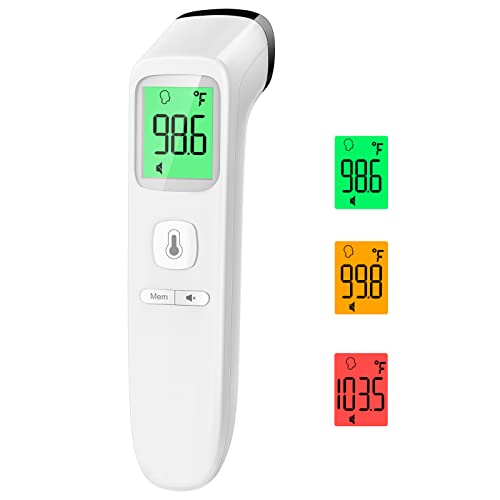
Reliable & Accurate: Goodbaby Forehead Thermometer has been clinically tested and found to be a fast and absolutely reliable gadget to use. It is ideal for forehead readings.
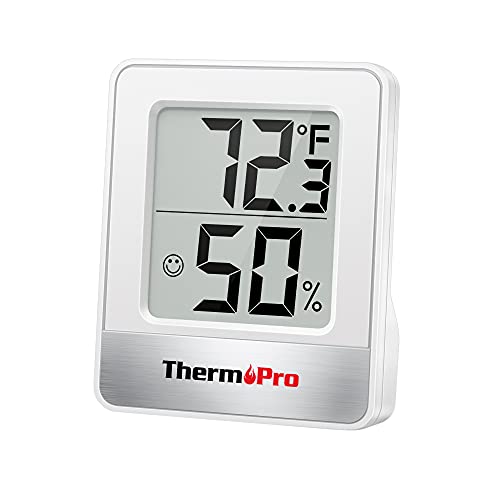
Face Icon Comfort Indicator: Humidity temperature gauge features face icons to indicate DRY/COMFORT/WET air conditions, quickly informs you how to adjust your humidifier or dehumidifier to achieve optimal comfort.

RAPID RESULTS: Obtain precise infrared temperature readings in just one second, ensuring quick and accurate assessment using the infrared thermometer.
Physiological Responses to Room Temperature Changes
Physiological responses to room temperature changes play an integral role in sleep quality and overall well-being. The body employs thermoregulatory mechanisms to manage its core body temperature (CBT).
- Approximately two hours before sleep, CBT declines, promoting heat loss.
- Vasodilation in the skin helps facilitate this cooling, enhancing sleep initiation.
Moreover, temperature sensitivity affects how well sleep is maintained.
- Cooler ambient temperatures, ideally around 65°F, support deeper sleep stages.
- Conductive heat loss from the body’s surface promotes restorative sleep, especially during the initial phases.
The heart rate also decreases with cooling, aligning with relaxation and improved sleep quality. Consequently, effective thermoregulation is essential for achieving restorative sleep and maintaining overall health. Additionally, using weighted blankets can provide calming pressure, further enhancing sleep quality and alleviating anxiety symptoms.
How Melatonin and Temperature Interact
As the evening approaches, melatonin plays a critical role in modulating body temperature, aiding in the preparation for sleep. Melatonin regulation initiates physiological changes that lower core body temperature while increasing peripheral temperature in areas like the hands and feet. This heat loss is essential for sleep onset, as melatonin promotes vasodilation, allowing the body to cool down.
Additionally, melatonin influences the hypothalamus, coordinating reductions in body temperature, blood pressure, and metabolism. It synchronizes internal temperature rhythms with the day-night cycle. Peaks in melatonin secretion correlate with the lowest core body temperature at night, promoting effective temperature synchronization. Disruption in melatonin can negatively affect circadian temperature rhythms, thereby impairing sleep quality and onset. Moreover, maintaining optimal humidity levels in the bedroom can further enhance sleep quality by preventing dryness that disrupts comfort and respiration.
Signs of an Overly Warm Sleep Environment
When a sleep environment is too warm, several signs may indicate its negative impact on sleep quality. Increased sleep latency, or difficulty falling asleep, often arises due to disrupted thermal regulation, causing discomfort in sleep apparel. Individuals may experience excessive sweating, particularly when lying down, as skin and bed temperatures rise.
Disrupted sleep, characterized by frequent awakenings, leads to fragmented rest and prevents entry into deep sleep stages. Additionally, many report subjective discomfort and dissatisfaction with their sleep experience, feeling too hot or damp throughout the night.
Lastly, chronic overheating can lead to increased daytime fatigue and irritability, affecting overall mood and cognitive performance. Recognizing these signs can help improve sleep quality by adjusting the sleep environment accordingly. The use of thermal sheets can be beneficial in regulating temperature and improving overall comfort during sleep.
Effective Strategies for Cooling Your Bedroom
Creating a comfortable sleeping environment requires effective strategies to cool the bedroom, especially during warmer months.
- Passive Cooling: This technique can greatly reduce indoor heat. Simple actions include using:
- Blinds or curtains to block sunlight during the day
- Operable windows for nighttime ventilation to allow cooler air inside
- Air Conditioning: While preferred, setting AC to a moderate temperature is more effective. This avoids excessive cooling, contributing to energy efficiency.
- Fans: These can improve air circulation without heavy energy use. However, they may not always enhance thermal satisfaction due to noise.
Combining these methods offers a balance between comfort and energy savings. Adapting strategies based on individual preferences is essential for achieving an ideal sleeping environment.
Recommended Products

Pair Sold: Each package includes 2 panels of blackout curtains. Each panel measures 40"W x 63"L, with a pair measuring 80"W x 63"L. Each panel has 6 anti-rust silver grommets(1.6 inch inner diameter) which would fit most standard curtain rods

MULTIPLE HANGING: Sold per pair, including 2 window panels - Panel measures: 52 x 84 - inches | Set measures: 104 x 84 - inches, with 3 curtain top hanging options (Back tab & Rod pocket & Pleated) for your personalized style. Each panel sewn with 4" rod pocket (7 back loops), 2" bottom hem and 0.8" side hem, specialized fitting the curtain rods up to 3

100% Total Blackout & UV Blocking: Achieve perfect darkness with these blackout curtains! The dedicated liner blocks 100% sunlight and UV rays, ideal for any bedroom or living room. This blackout curtain protects furniture from fading and helps regulate room temperature year-round.
The Role of Bedding Materials in Temperature Control
The choice of bedding materials greatly impacts temperature control and overall sleep quality. Various temperature regulation materials can enhance comfort. For instance, moisture-wicking fabrics, like TENCEL Lyocell, draw moisture away, promoting better sleep. Natural fibers such as cotton, linen, and bamboo offer breathability, allowing air circulation and helping to regulate body temperature. In contrast, synthetic fibers like polyester can trap heat, leading to discomfort.
- Phase change materials absorb and release heat, maintaining a stable sleep environment.
- Wool provides excellent insulation and moisture management, ensuring an ideal microclimate.
Selecting bedding with these properties can prevent overheating or overcooling, directly influencing sleep quality. Ultimately, understanding bedding material properties guides users towards a more restful night’s sleep.
Recommended Products

4 PIECE BED SHEET SET: 2 pillow cases and a flat sheet and fitted sheet. Flat Sheet (102”x 90”) Fitted Sheet (80”x 60”) 2 Pillow Cases (20” x 30”).

4 PIECE BED SHEET SET: 2 pillow cases and a flat sheet and fitted sheet. Flat Sheet (102”x 90”) Fitted Sheet (80”x 60”) 2 Pillow Cases (20” x 30”).

AWARD-WINNING COOLING: Made from rayon derived from bamboo, these cooling sheets reign supreme in breathability and moisture-wicking, and are endorsed by Forbes Vetted and The New York Post
Monitoring Sleep Temperature for Personal Comfort
Monitoring sleep temperature plays a significant role in achieving personal comfort during rest. Using sleep sensors, individuals can engage in effective temperature tracking, leading to better climate control. Customizing comfort settings based on personal metrics allows users to align the sleeping environment with their unique sleep preferences.
Adaptive systems can adjust temperatures throughout the night, optimizing conditions for deep sleep. Device accuracy is essential; options like smart beds or wearables provide precise temperature readings. Nighttime adjustments facilitate comfortable sleep experiences, reducing disturbances caused by hot or cold conditions. Through data analysis, users can identify trends in their sleep quality, helping them fine-tune their environment for improved rest. This approach leads to a more personalized and effective sleeping experience.
Recommended Products

SMART BABY BREATHING & SLEEP MONITOR: Track your baby’s abdominal movement, sleep position, and feeling temperature trends to stay informed day and night. Receive timely notifications through the app or audible alerts if your baby rolls over or shows signs of feeling warm.

Fast & Accurate: Equipped with the SCD4x CO₂ sensor (photoacoustic NDIR principle), it ensures accuracy of ±(40ppm + 5%), a 5s refresh rate, and built-in pressure compensation for any altitude. It helps prevent headaches and drowsiness, improving sleep and concentration.Please note: Calibrate in the app's settings outdoors if required.

【Advanced Chip & Dual Sensor】Smart rings for women men with Bluetooth 5.2 dual-mode RTL8762ESF chip, VC30F-S and ST LIS2DOCTR 6-degree-of-freedom motion sensor, achieving high-speed connection, accurate monitoring, intelligent identification, wearing detection and privacy protection. Fitness tracker ring stability improved by 40%, pairing only takes 0.8s, Basic data measurement is more accurate, and can accurately identify 15 preset actions. Data transmission is encrypted to protect user privacy
Research Findings on Temperature and Sleep Outcomes
Research indicates that maintaining an ideal bedroom temperature is essential for improving sleep outcomes across various age groups. Ideal sleep temperatures vary:
- Older adults benefit from ranges of 68°F to 77°F (20-25°C).
- The general adult population thrives in cooler conditions, between 60°F to 67°F (15.5-19.5°C).
Exceeding these ranges can negatively impact sleep physiology. For instance, temperatures above 77°F may reduce sleep efficiency by 5-10% in older adults. Conversely, environments below 60°F can trigger physiological stress, such as shallow breathing.
Maintaining thermoneutral conditions allows the body to regulate its core temperature effectively, facilitating sleep onset. As a result, employing appropriate sleep temperatures is vital for achieving restful and restorative nighttime rest.
Achieving Optimal Sleep Through Temperature Management
Achieving ideal sleep through temperature management involves understanding several key factors that influence how well one can rest. To promote sleep hygiene, one should maintain a bedroom temperature between 60°F and 67°F. This range allows the body to lower its temperature naturally, which is essential for quality sleep.
Important considerations for thermal comfort include:
- Personal preferences may vary, so individuals should experiment with different temperatures.
- Bedding choices can impact perceived temperature, enhancing comfort.
- For older adults, slightly warmer temperatures between 68°F and 77°F may be necessary.
Frequently Asked Questions
Can Sleep Positions Affect How Temperature Impacts Sleep Quality?
Like a painter choosing colors, sleep position intricately influences temperature sensitivity and overall sleep quality. Certain positions can enhance or diminish warmth dissipation, impacting how well temperature affects restful sleep, revealing each sleeper’s unique preferences.
How Does Humidity Influence the Perception of Bedroom Temperature?
Humidity greatly influences comfort levels by altering perceived temperature. High humidity intensifies warmth while low humidity can create discomfort through dryness, ultimately affecting sleep quality and overall satisfaction with the sleeping environment.
What Should I Do if I Share a Bed and Have Different Temperature Preferences?
In the dance of temperature preferences, a couple may explore diverse solutions through bed accessories like separate blankets and cooling pads, while adjusting settings gradually to harmonize their comfort, ensuring restful slumber for both.
Are There Specific Sleepwear Materials That Help Regulate Temperature Better?
Specific sleepwear materials, such as bamboo jersey and NATTCOOL fabric, incorporate breathable fabrics and moisture-wicking materials, effectively regulating temperature during sleep, enhancing comfort, and promoting a better night’s rest for various sleepers.
How Can I Identify if My Room Is Too Cold or Too Warm for Sleep?
To identify if a room is too cold or too warm for sleep, observe temperature signs such as shivering or sweating. Comfort indicators include restlessness and difficulty falling asleep, signaling a need for temperature adjustment.

