As an Amazon Associate, we earn from qualifying purchases. Some links on this site are affiliate links at no extra cost to you. Our recommendations are based on thorough research and editorial judgment.


Extinguishing Candles Safely: Best Techniques

To extinguish candles safely, several effective techniques are recommended. Blowing out candles should be avoided due to smoke and bacteria risks. Instead, use a snuffer or wick dipper to minimize smoke and maintain cleanliness. Metal lids can effectively suffocate flames by cutting off oxygen. Always supervise burning candles, keeping them at least 12 inches from flammable materials. Following these safety practices can improve air quality and reduce fire hazards. More insights await on maintaining candle safety and positioning.
Key Takeaways
- Use a candle snuffer to extinguish flames safely, reducing smoke and preserving candle integrity.
- Employ a wick dipper to push the wick into the wax, minimizing smoke and oxygen exposure.
- Cover candles with metal lids to suffocate flames quickly and limit harmful air currents.
- Avoid blowing out candles to prevent bacterial contamination and maintain a healthy environment.
- Always supervise burning candles and extinguish them before leaving the room to prevent accidents.
Understanding Proper Extinguishing Techniques
Understanding proper extinguishing techniques is essential for safe candle use. Blowing out candles can release smoke and harmful particles, negatively affecting respiratory health. Additionally, it increases the risk of wax splatter and possible burns. Instead, consider these safer methods for extinguishing:
- Wick Dipper: This tool pushes the wick into the melted wax, cutting off oxygen, which extinguishes the flame with minimal smoke. It also promotes wick care by recoating it in wax.
- Candle Snuffer: Snuffers eliminate oxygen and burn debris, preserving candle maintenance while minimizing unpleasant odors. Utilizing proper extinguishing techniques can enhance the overall candle burning experience and make your environment cleaner and safer.
The Importance of Using a Snuffer
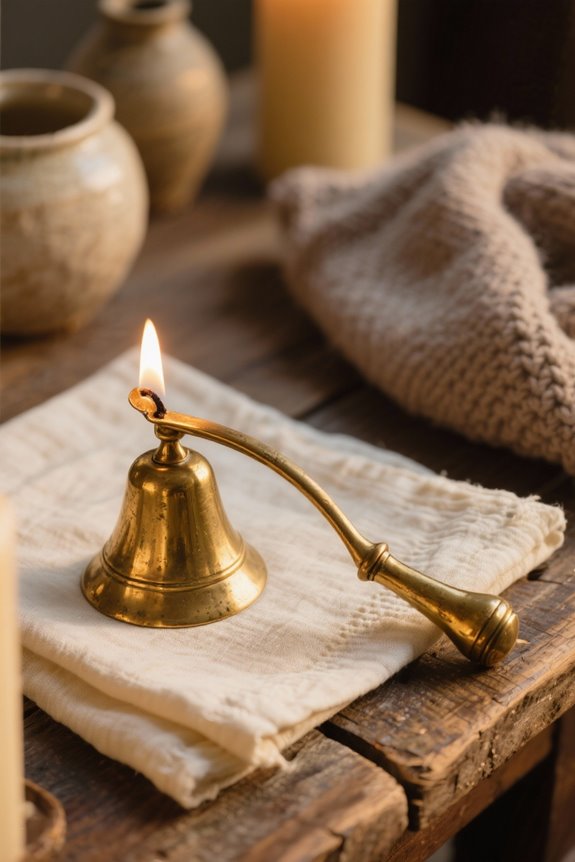
Using a candle snuffer is an essential practice for enhancing safety and preserving candle quality. The snuffer benefits encompass reducing fire hazards, as it contains flames without scattering sparks. This method minimizes the risk of burns from hot wax splatter, offering a safer extinguishing approach.
Moreover, employing a snuffer improves candle longevity by preventing wick smoldering and promoting longer use. Research indicates that using a snuffer can extend candle life by approximately 30%. Additionally, it reduces smoke and soot, thereby maintaining indoor air quality and aesthetic cleanliness. By ensuring mess-free extinguishing, snuffers contribute to the overall value of candles, preserving fragrance and extending their usability for numerous burns. This sophisticated tool is a worthy addition to candle care routines. To further enhance indoor fragrance, consider using scented wax cubes as a flameless alternative that offers a robust scent profile, reducing the need for traditional candles.
Metal Lids as an Effective Extinguishing Method

An effective method for extinguishing candles involves the use of metal lids, which serve multiple functions beyond just putting out the flame. The primary advantage is their ability to suffocate the flame by depriving it of oxygen, enhancing extinguishing efficacy. This method minimizes smoke and avoids the chaotic air currents created by blowing, preserving the candle’s fragrance and appearance.
Key metal lid benefits include:
- Heat resistance: Metal withstands high temperatures without warping.
- Dust protection: Lids keep wax clean when not in use.
- Noise reduction: The quiet operation contrasts with noisy blowing.
- Aesthetic preservation: They reduce soot and wax splatter, maintaining visual appeal.
- Additionally, using lids effectively complements the natural composition of coconut wax candles, ensuring a clean burn that maintains air quality.
Using metal lids provides a safe, efficient way to extinguish candles effectively.
Why You Should Avoid Blowing Out Candles
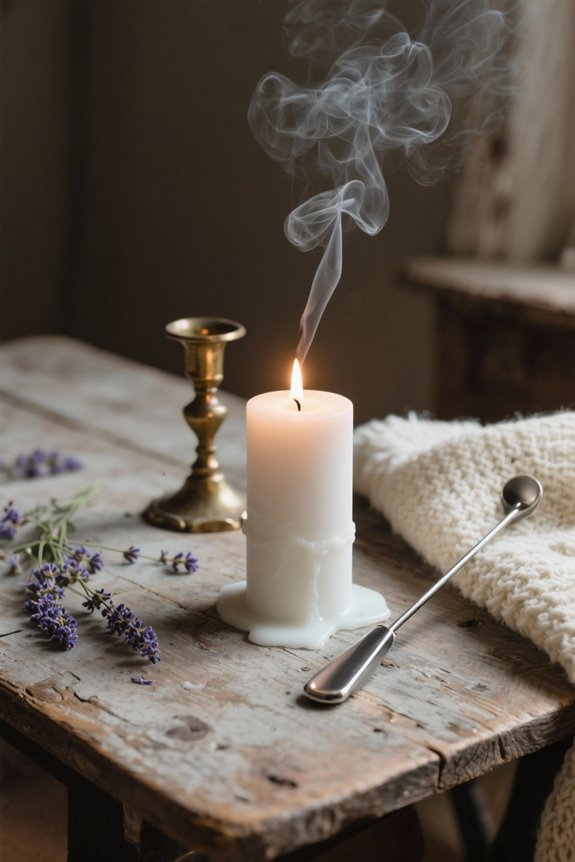
Why is it important to avoid blowing out candles? Blowing directly onto a candle can lead to bacterial contamination, particularly on food items like birthday cakes. Research shows that the bacteria on cake frosting can increase by an average of 14 times after blowing out candles. This microbial transfer occurs when breath carries unwanted germs, raising food safety concerns in communal settings.
While this increased bacterial load does not directly correlate with a higher illness risk, caution is still advised. Instead of blowing, consider using alternative methods like a candle snuffer or dipping the wick into wax. These techniques help extinguish the flame while minimizing health implications related to bacterial contamination. Prioritizing safe extinguishing methods promotes a healthier environment for everyone. Additionally, employing proper ventilation techniques can further reduce contamination risks associated with indoor activities.
Ensuring Candles Are Never Left Unattended
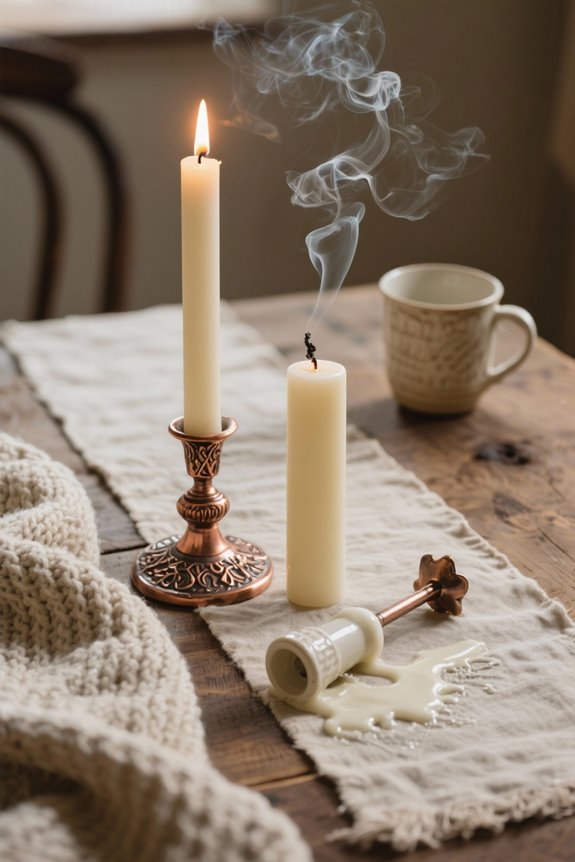
To guarantee safety, it is important not to leave candles unattended, as doing so can lead to serious risks. Candle supervision is crucial, especially since over 33% of candle fires occur when they are left alone. These unattended flames can ignite nearby combustible materials, such as curtains or bedding, resulting in property damage or injury.
To enhance risk awareness, individuals should:
- Always supervise burning candles, particularly around children, who are at a higher risk.
- Make certain that flammable items are kept at least a few feet away from the flame.
- Establish a habit of extinguishing candles before leaving a room or going to sleep. Additionally, consider using shaggy blankets as a soft surface to place your candles safely away from flammable items.
Techniques to Prevent Re-ignition
Proper techniques for extinguishing candles are important to prevent re-ignition, guaranteeing a safe environment after use. The use of candle snuffers is highly recommended as they efficiently cut off the oxygen supply, minimizing wick ember glow and reducing the chances of re-ignition. Proper wick maintenance also plays a significant role. Trimming wicks to about ¼ inch before lighting promotes stable flames, which helps prevent flare-ups.
Furthermore, it is critical to guarantee complete flame extinguishment. After extinguishing, individuals should allow the candle to cool completely before moving or relighting. Waiting several minutes to confirm that no glowing embers remain on the wick is important. These techniques enhance re-ignition prevention, contributing to overall candle safety.
Keeping Candles Away From Flammable Objects
After extinguishing candles safely, attention must turn to the surrounding environment. Proper candle placement is essential to minimize risks. It is advisable to maintain a minimum clearance of 12 inches, or ideally 3 feet, from flammable materials. Key points to evaluate include:
- Fabric items like drapes, bedding, and clothing should be kept away.
- Paper products such as books and decorations require distance.
- Avoid placing candles near flammable liquids and electrical appliances.
Additionally, clustering multiple candles should be avoided, as it can lead to uneven burning. Ensuring that no flammable objects are within a candle’s proximity is vital for fire prevention. By taking these precautions, individuals can notably reduce the risk of accidental fires related to candle usage. Furthermore, always use containers made from heat-resistant materials to enhance safety while burning candles.
Benefits of Using Heat-Resistant Holders
Using heat-resistant holders enhances candle safety and overall candle usage experience. These holders provide essential heat protection, as they withstand high temperatures without cracking or melting. They create a barrier between candle heat and surrounding surfaces, thereby reducing fire risks and preventing damage.
Key benefits include:
- Stability: Properly sized holders prevent tipping and rolling, effectively minimizing accidents.
- Wax Containment: Many holders are designed with features that trap melted wax, preventing mess and reducing the risk of igniting flammable materials.
- Compatibility: Using holders that fit candle dimensions optimizes heat dissipation and enhances durability. Additionally, high-quality materials, such as solid wood or metal, enhance durability and stability, ensuring long-lasting use of the candle holders.
Creating a Draft-Free Environment for Candle Burning
Creating a draft-free environment for candle burning is essential to achieving ideal performance and safety. Draft prevention techniques play a crucial role in maintaining a stable flame and efficient wax consumption. To optimize candle safety, consider the following strategies:
- Placement: Position candles away from open doors, windows, and air vents to minimize airflow disruptions.
- Enclosures: Use hurricane-style glass holders to shield candles in draft-prone areas.
- Assessment: Regularly evaluate airflow patterns during different times of day or seasons, adjusting candle locations as necessary.
- Spacing: Maintain at least three inches between multiple candles to avoid mutual drafts that can destabilize flames.
In addition to enhancing burn quality, using premium plant wax in candle production can further improve safety and air quality. Implementing these techniques can greatly enhance burn quality and reduce safety hazards associated with fluctuating air currents.
The Necessity of Trimming Candle Wicks
Trimming candle wicks is an important step that promotes both safety and effectiveness during candle use. Regular wick care is vital for several reasons:
- Preventing Fire Hazards: Long wicks can lead to larger flames, increasing fire risks. Trimming to 1/4 inch helps control flame height and reduces flickering.
- Reducing Soot and Smoke: Well-trimmed wicks produce considerably less soot, improving air quality and minimizing staining on surfaces.
- Promoting Even Wax Pooling: A trimmed wick enables even melting, preventing waste and maximizing candle lifespan.
- Enhancing Fragrance Release: Short wicks help release scents effectively, improving overall candle performance.
For safety, always extinguish the candle before trimming. Practicing proper candle maintenance supports a safer, more enjoyable experience. Additionally, just like using bed sheet holder straps can increase the stability and efficiency of your sleep environment, regularly trimming wicks ensures optimal candle performance and safety.
Best Practices for Positioning Candles Safely
Proper candle placement contributes greatly to safety and enjoyment in any setting. To guarantee flame stability, position candles on a stable, heat-resistant surface. Avoid soft materials like beds or rugs, as they can cause tipping or heat damage.
Maintain a 12-inch gap between candles and any flammable items such as curtains or papers to reduce fire risks. Additionally, place candles in draft-free areas, keeping them away from open windows and vents to promote even burning.
Ascertain candles are out of reach of children and pets, and consider using enclosed holders for extra protection. Group candles at least 3 inches apart to prevent heat buildup and airflow disruptions. This thoughtful candle placement enhances both safety and enjoyment. Moreover, using eco-friendly materials can ensure a pleasant indoor environment while maintaining safety.
Recognizing Common Candle Fire Risks
When candles are used in homes, a variety of fire risks may arise, making it essential to recognize and address them. Common fire causes include:
- Combustible materials placed too close to the flame. This includes items like bedding, curtains, and décor.
- Tipping over of candles, often due to unstable holders or bumps.
- Unattended burning candles, which account for many fire incidents, especially during peak times like December.
Statistics indicate over 20,000 annual home candle fires in the U.S., resulting in over 150 deaths and more than 1,500 injuries. Certain candle materials, particularly tealights and tapers, pose higher risks due to their burn characteristics. Recognizing these factors is vital in maintaining candle safety at home.
Selecting Advanced Safety Features in Candles
Selecting candles with advanced safety features can greatly reduce fire hazards in homes. Consumers should consider options that comply with safety standards like ASTM F2417.
- Advanced Wick Technologies:
- Self-extinguishing wicks automatically stop burning, preventing damage and fire risks.
- Specialized coatings keep wicks upright, promoting consistent flame size.
- Natural cotton wicks provide cleaner-burning options over synthetic materials.
- Material Safety:
- Regular testing for toxic substances guarantees safety in dyes, coatings, and wax.
- Eco-friendly materials help minimize harmful emissions during burning.
- Consumers should always check labels for safety instructions and warnings.
These features collectively enhance candle safety, allowing for a more secure home environment during use.
General Candle Safety Precautions
Candle safety precautions are essential for minimizing fire risks and safeguarding a secure environment while enjoying their ambiance. Key measures include:
- Candle Placement: Keep candles at least 12 inches away from flammable items, using sturdy holders to prevent tipping.
- Candle Lighting: Trim wicks to about one-quarter inch before lighting for even burning, and burn candles for 2 to 4 hours to avoid overheating.
- Candle Supervision: Always extinguish candles when leaving the room or going to sleep. Keep out of reach of children and pets.
- Candle Storage: Store candles in a cool, dry place, and verify packaging is removed.
Monitoring Candle Burning Time for Safety
Monitoring candle burning time is essential for maintaining safety and maximizing the enjoyment of fragrances. Most candles should not burn continuously for more than 3 to 4 hours. Adhering to this guideline helps prevent overheating and allows for proper wax pooling. Additionally, burning a candle longer than this can lead to wick mushrooming and increased soot formation.
To achieve the best performance, the first burn should last about 3 to 4 hours, creating a full melt pool and avoiding tunneling. Proper wick maintenance, such as trimming to 1/4 inch, guarantees an even candle burn. Finally, placing candles away from drafts contributes to consistent burning, protecting both the candle and the environment in which it is used.
Frequently Asked Questions
Can I Use Essential Oils With My Candles Safely?
While essential oils can enhance candles’ fragrance, their volatile nature raises concerns regarding candle safety. Balancing the aromatic benefits with the flammability risks, one must exercise caution and consider safer alternatives for a worry-free experience.
What Types of Candles Burn the Cleanest?
Among candle options, beeswax candles and soy wax are recognized for their clean-burning properties, making them preferable paraffin alternatives. Using natural candle wicks enhances their performance, further diminishing soot production and indoor air pollution.
How Should I Dispose of Used Candle Wax?
Disposing of used candle wax can be like untangling a yarn knot. Utilizing wax disposal methods such as composting natural waxes and following candle recycling tips guarantees eco-friendly practices while minimizing impact on the environment.
Are There Non-Toxic Candle Options Available?
Non-toxic candle options include soy candles, which are biodegradable and burn cleanly, and beeswax, known for its air-purifying benefits. Both options offer safe, eco-friendly alternatives to traditional paraffin candles, promoting healthier indoor air quality.
Can I Reuse Candle Jars for Other Purposes?
Studies indicate that about 40% of candle consumers reuse jars, showcasing the trend of jar repurposing. Proper cleaning enables effective candle recycling, making these jars ideal for storage, decor, or even plant containers.