As an Amazon Associate, we earn from qualifying purchases. Some links on this site are affiliate links at no extra cost to you. Our recommendations are based on thorough research and editorial judgment.


Keep Bedrooms Warm Without Higher Energy Costs

To keep bedrooms warm without increasing energy costs, one should enhance insulation using materials like spray foam or structural insulated panels. Optimizing heating solutions, such as using space heaters selectively and zoning central heating, can considerably reduce energy consumption. Additionally, utilizing nighttime curtains and draft stoppers retains warmth. Regular HVAC system maintenance guarantees efficiency. Incorporating thermal mass materials further stabilizes indoor temperatures. By following these practical steps, one can create a cozy environment while managing energy use effectively. More insights can be found below.
Key Takeaways
- Upgrade bedroom insulation using spray foam or structural insulated panels to enhance thermal resistance and reduce energy costs.
- Utilize space heaters selectively and turn off central heating to save energy while maintaining warmth in occupied areas.
- Implement nighttime curtains and draft stoppers to minimize heat loss and maintain a cozy environment during colder months.
- Regularly maintain HVAC systems to ensure optimal performance, prolong lifespan, and prevent excessive energy consumption.
- Incorporate thermal mass materials and strategically place them to absorb sunlight, storing heat for later release and stabilizing indoor temperatures.
Upgrade Bedroom Insulation
Upgrading bedroom insulation is an essential step for enhancing comfort and reducing energy costs. Effective insulation materials include structural insulated panels (SIPs), spray foam, and batts. SIPs improve energy efficiency by 12% to 14% due to their airtight construction. Spray foam, particularly closed-cell type, offers high R-values, enhancing thermal resistance. Batts made from fiberglass or mineral wool provide consistent performance without settling, making them a durable choice. Cost efficiency is also important; balancing R-value with installation expenses can lead to significant savings. Additionally, proper air sealing complements these materials, reducing drafts and maintaining warmth. By choosing the right insulation, homeowners can create a more comfortable bedroom while optimizing energy use and lowering bills. Furthermore, evaluating reflective insulation for cost reduction can significantly improve cooling efficiency during warmer months.
Use Space Heaters Selectively
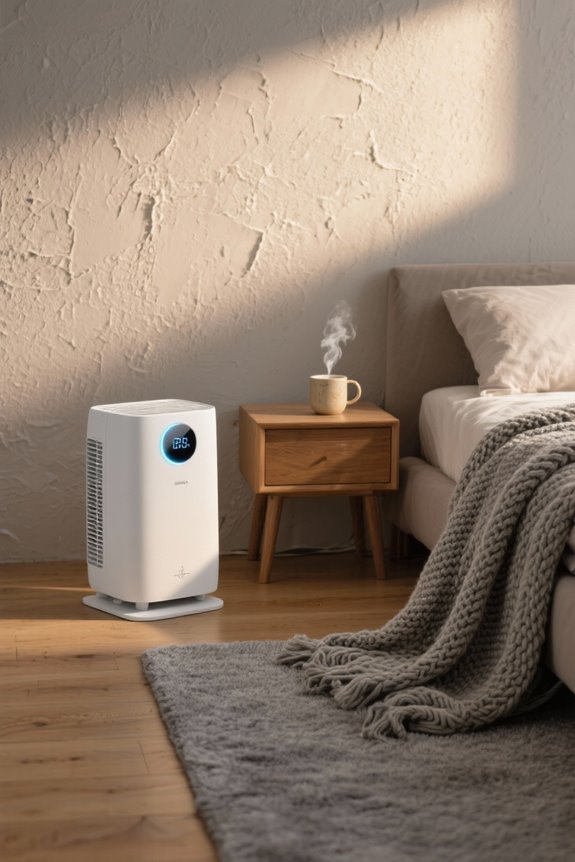
Using space heaters selectively can markedly improve bedroom comfort while keeping energy costs manageable. Space heater efficiency is notable; they convert nearly 100% of electricity into heat. By using space heaters for zone heating, households can maintain warmth in occupied spaces without fully relying on central heating systems.
Consider the following points:
- Choose the Right Heater: Radiant heaters work well for immediate warmth, while convection heaters are better for longer use.
- Optimize Settings: Use models with built-in thermostats for efficient temperature control.
- Turn Off Central Heating: Adjust central heating when using space heaters to maximize savings.
This selective use can lead to substantial energy cost reductions, focusing warmth precisely where it is needed without heating unoccupied rooms. Additionally, using all-season comforters can enhance warmth and comfort during colder months, providing a cozy layer of insulation.
Optimize Central Heating Zoning
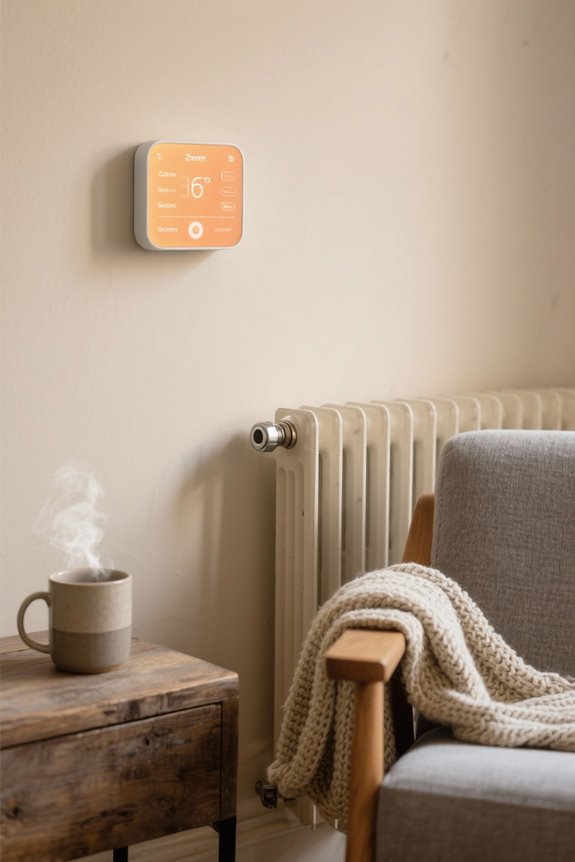
Optimizing central heating zoning can considerably enhance energy efficiency and comfort in homes. Zoned heating systems target energy use specifically in occupied areas, promoting significant energy savings. Studies show that these systems can reduce overall energy consumption by 27% to 50%, with an average of 38% savings compared to traditional setups.
Key benefits include:
- Customized comfort: Each room can be set to a preferred temperature.
- Reduced wear on equipment: Limited operation cycles lower stress on HVAC components.
- Lower operational costs: By using energy only where needed, homeowners save money during winter months.
- Environmental impact: Efficient zoning helps decrease greenhouse gas emissions by approximately 20%. Additionally, implementing energy-efficient options can enhance overall system performance and further lower costs.
Leverage Nighttime Heat Retention

As nighttime temperatures drop, retaining heat becomes essential for comfort in bedrooms. One effective method is utilizing nighttime curtains, which can help trap warmth inside. These specially designed curtains reduce heat loss by creating an insulating barrier against cold windows.
Additionally, using draft stoppers at the bottoms of doors is beneficial. These simple tools block cold air from infiltrating the room, further maintaining a cozy environment.
For best results, combine both nighttime curtains and draft stoppers. Sealing gaps and cracks around windows and doors with caulk or weatherstripping also enhances insulation and prevents drafts. Regular maintenance of these elements guarantees their effectiveness, ultimately making bedrooms warmer without incurring higher energy costs. Such strategies support a comfortable atmosphere throughout the chilly nights. A heated mattress pad can also provide customizable warmth to further enhance your sleeping experience during cold nights.
Adopt Supplemental, Low-Cost Solutions

Many homeowners seek effective ways to keep bedrooms warm without incurring high energy costs. Adopting supplemental, low-cost solutions can considerably enhance warmth.
- Draft Stoppers: Placing draft stoppers at bedroom thresholds helps block cold air from entering, minimizing drafts.
- Thermal Curtains: Using thermal curtains over windows at night can reduce heat loss by up to 25%. These curtains act as an additional barrier against the cold.
- Weatherstripping and Caulking: Sealing gaps around doors, windows, and electrical outlets also prevents cold air infiltration, potentially lowering heating costs by 5–30% annually.
- Rugs and Bedding: Layering thick rugs on cold floors and using warm bedding materials further insulates bedrooms against chilly temperatures. Proper maintenance of bedding items is also essential for ensuring comfort and warmth throughout the season.
These strategies collectively guarantee a cozier bedroom during colder months.
Minimize Bedroom Heating Risks
Keeping bedrooms warm should not compromise safety. To minimize heating risks, particularly with space heaters, homeowners must prioritize space heater safety and follow essential guidelines:
- Select safe heaters: Choose models with automatic shutoff features and tip-over switches. Look for a safety certification like a UL label.
- Maintain clearance: Keep heaters at least three feet away from flammable materials, such as bedding and curtains.
- Avoid unattended use: Never leave space heaters running while sleeping or when the room is unoccupied to prevent fire hazards.
- Regular inspections: Check heating equipment for damage and verify smoke alarms and carbon monoxide detectors are functional for fire prevention. Additionally, ensure your bedding accessories are properly stored and organized to avoid clutter around heating sources.
Improve Window Efficiency
Improving window efficiency plays an essential role in maintaining a comfortable bedroom temperature while managing energy costs. The choice of window orientation is vital, as it influences solar heat gain. For example, south-facing windows in cold climates should have high solar heat gain coefficients (SHGC) and low U-factor ratings to maximize warmth.
Additionally, selecting suitable frame materials affects window performance markedly. Vinyl and fiberglass frames offer excellent insulation and require less maintenance, while wooden frames provide natural insulation but need more care. Conversely, aluminum frames are less efficient due to heat conduction unless they include thermal breaks. Ultimately, combining the right window type and orientation can help reduce heating costs by improving overall energy efficiency. Moreover, maintaining optimal humidity levels using console humidifiers can further enhance comfort and insulation in your home.
Maintain Heating Systems Regularly
Effective temperature management in bedrooms goes beyond window efficiency; regular maintenance of heating systems is also vital. Proper maintenance can enhance energy efficiency by 5% to 15%, leading to remarkable cost savings. Key tasks include:
- Filter Maintenance: Checking and replacing air filters monthly prevents dust accumulation and guarantees ideal airflow.
- Duct Sealing: Sealing ducts is essential, as it reduces energy loss and enhances overall system performance.
Performing these maintenance tasks regularly can also extend the lifespan of HVAC systems by up to 50%. For best results, homeowners should conduct quarterly inspections and annual tune-ups, especially in extreme climates. Additionally, using energy-efficient heaters can further optimize heating costs without compromising comfort. Through diligent system care, one can enjoy comfort without incurring higher energy costs.
Utilize Thermal Mass in Room Design
Utilizing thermal mass in room design can notably enhance energy efficiency and comfort within residential spaces. By incorporating materials like concrete, brick, and stone, homeowners can leverage thermal mass benefits effectively.
- Strategic placement of these materials is vital; positioning them near south-facing windows allows sunlight to be absorbed during the day.
- Exposed thermal mass can store this heat and slowly release it at night, stabilizing indoor temperatures.
- Insulation must also be balanced with thermal mass for superior performance.
- Additionally, placing thermal mass near radiant heat sources, such as wood stoves, enhances warmth distribution.
Ultimately, thoughtful design can greatly reduce heating loads and improve overall comfort without incurring higher energy costs. Incorporating features like moisture-wicking fabrics in your thermal underwear choices can supplement warmth further while using thermal mass effectively in your home.
Explore Alternative Heating Options
Exploring alternative heating options presents homeowners with a variety of ways to maintain warmth without incurring high energy costs. Two popular methods include electric baseboards and radiant systems.
- Electric baseboards are hardwired into the room’s electrical system, making them efficient for supplemental heating. They can be connected to thermostats, allowing for scheduled heating that improves energy savings.
- Radiant heating systems, available in electric or hydronic forms, deliver warmth directly through cables or hot water tubing. These systems are effective because they eliminate ductwork heat loss. In addition, programmable thermostats enhance their cost-effectiveness. Many models feature energy-efficient settings that further reduce electricity costs while maintaining comfort.
Frequently Asked Questions
How Can I Reduce Humidity in My Bedroom During Winter?
To reduce humidity in the bedroom during winter, one should consider dehumidifier options and implement ventilation tips, such as opening windows briefly daily, using exhaust fans, and managing moisture sources effectively to maintain comfortable humidity levels.
What Colors Are Best for Warm Bedroom Decor?
Warm color palettes like deep reds, earthy yellows, and warm neutrals create inviting atmospheres. Incorporating cozy accent pieces, such as textured throws or cushions, enhances the overall warmth and comfort, making bedrooms feel snug and welcoming.
Are There Plants That Help Maintain Warmth Indoors?
Heat retaining plants can enhance indoor climate benefits by increasing humidity, which may create a sensation of warmth. However, their effect on actual temperature is negligible and should supplement traditional heating methods, not replace them.
How Can I Improve Natural Light in Winter Months?
Studies reveal that homes with ideal natural light can yield a 20% boost in mood. To improve natural light in winter, employ sheer window treatments and incorporate reflective surfaces, enhancing brightness and warmth throughout the space.
When Should I Replace Old Insulation in My Bedroom?
Old insulation should be replaced when it shows visible deterioration, experiences moisture issues, or fails to maintain energy efficiency. Upgrading insulation materials guarantees peak performance, reducing energy costs and enhancing the overall comfort of the bedroom.