As an Amazon Associate, we earn from qualifying purchases. Some links on this site are affiliate links at no extra cost to you. Our recommendations are based on thorough research and editorial judgment.


Humidifiers In Nurseries: Best Practices

Maintaining ideal humidity in nurseries is essential for infant health. The perfect humidity range is 40-60%. Humidifiers, particularly cool-mist types, prevent skin irritation, ease respiratory discomfort, and improve sleep quality. Safe placement of humidifiers is vital; keep them 3-4 feet from the crib. Regular maintenance is necessary to avoid mold and bacteria growth. Additionally, using hygrometers can help monitor indoor humidity levels effectively. Understanding these factors can further enhance the nursery environment for infants.
Key Takeaways
- Maintain humidity levels between 40-60% to enhance infant hydration, skin health, and respiratory comfort.
- Use cool-mist humidifiers, as they are safer for infants and energy-efficient for larger rooms.
- Position the humidifier 3-4 feet away from the crib on a stable surface to ensure safety.
- Regularly clean the humidifier to prevent mold growth and harmful bacteria, using appropriate cleaning agents.
- Utilize hygrometers to monitor humidity levels and adjust settings seasonally to prevent excess moisture.
Importance of Humidity for Infant Health
You may be interested

Aromatherapy With Humidifiers: Safety Tips
November 15, 2025

Best Bedroom Humidifiers: Types Explained
November 15, 2025

Dry Indoor Air In Winter: Main Causes
November 15, 2025
Maintaining appropriate humidity levels in a nursery is essential for infant health, particularly because infants have delicate skin and respiratory systems. Adequate humidity can greatly enhance infant hydration and overall skin health.
- Low humidity leads to cracked skin and discomfort, risking skin barrier damage.
- Keeping humidity between 40-60% helps prevent dryness and associated complications.
- In dry climates or winter, humidifiers can effectively maintain these levels.
Parents should consider using humidifiers to guarantee ideal conditions for their baby’s skin. Additionally, combining environmental humidity control with topical moisturizers can further support skin integrity. By understanding the humidity effects on their infant’s health, caregivers can create a comfortable environment that promotes skin hydration and overall well-being, reducing the risk of irritation and discomfort. Using shaggy blankets can also provide a cozy layer of warmth and comfort for infants during colder months.
Benefits of Humidifiers for Respiratory Health

When considering respiratory health in infants, the addition of humidity to the nursery environment can play a significant role. Humidifiers provide several advantages that promote pediatric comfort and alleviate common respiratory issues.
- Alleviating Symptoms: They help reduce throat irritation, nasal congestion, and coughs by keeping airways moist during respiratory infections.
- Preventing Infections: Maintaining humidity can lower the risk of upper respiratory infections by keeping nasal passages hydrated.
- Enhancing Treatment: In hospital settings, humidified air can lead to reduced oxygen needs and shorter hospital stays for infants. Additionally, using a humidifier with high mist output significantly improves the effectiveness of the moisture added to the air.
Recommended Products

𝙁𝙖𝙨𝙩 𝙃𝙪𝙢𝙞𝙙𝙞𝙛𝙞𝙘𝙖𝙩𝙞𝙤𝙣 𝘼𝙡𝙡 𝙉𝙞𝙜𝙝𝙩: Runs for up to 25 hours on low thanks to its SUPER LARGE capacity of 2.5 liters. The soothing moisture helps quickly relief congestion and dry throat.
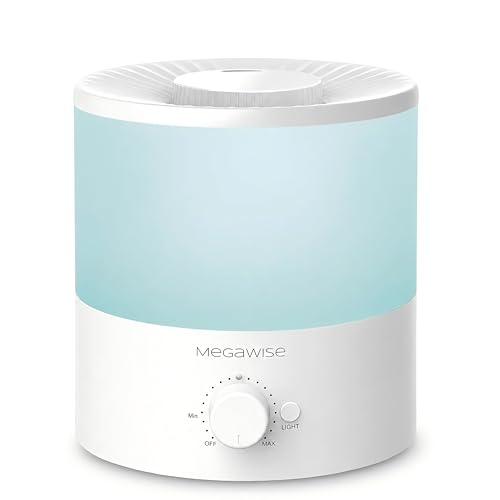
We Care About You: The mist humidifier will be automatically shuts off if waterless, and it is BPA free, FCC Ctificated and RoHS, creating a safe and healthy environment for your families.

ULTRASONIC COOL MIST HUMIDIFIER: Our baby humidifier converts water into a refreshing mist that runs up to 60 hours. The mist adjuster allows for a customizable experience, with a simple knob twist. The BPA-free water tank helps achieve safety and purity.
Skin and Allergy Advantages of Humidifiers
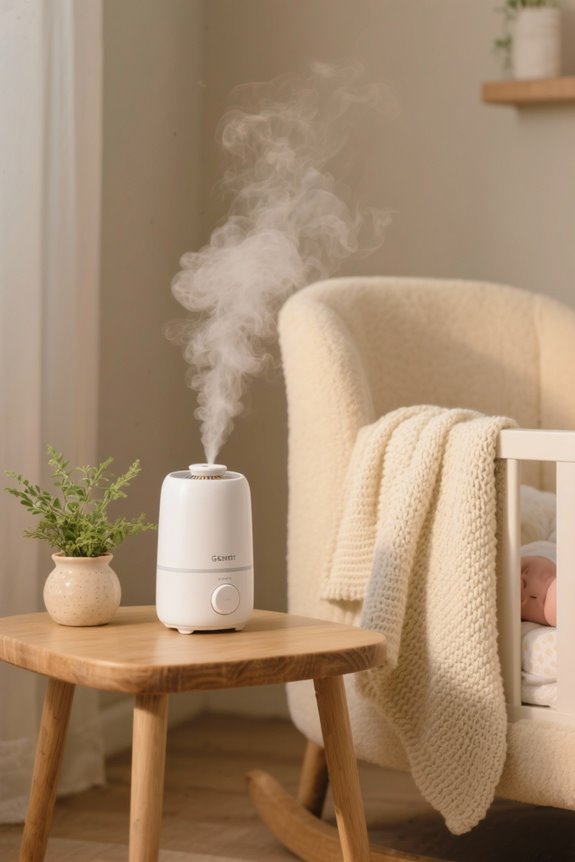
Humidity in a nursery not only supports respiratory health but also offers significant benefits for a baby’s skin and allergies. Proper humidity levels help maintain the skin barrier, protecting sensitive skin from dehydration.
Key advantages include:
- Hydration Support: Humidifiers keep air moist, reducing dryness and irritation, which can lead to redness.
- Eczema Prevention: Consistent use may decrease the risk of eczema flare-ups in infants, who have delicate skin.
- Allergen Reduction: Humidifiers can help capture airborne allergens, minimizing their presence and irritant effects.
Maintaining ideal humidity (40–60%) is essential for these benefits. Well-maintained cool-mist humidifiers are recommended to guarantee safety and effectiveness, promoting overall skin health and alleviating allergy symptoms for babies. Additionally, using humidifiers for large rooms can further enhance air quality, particularly in nursery environments that require optimal humidity levels.
Types of Humidifiers: Cool-Mist vs. Warm-Mist
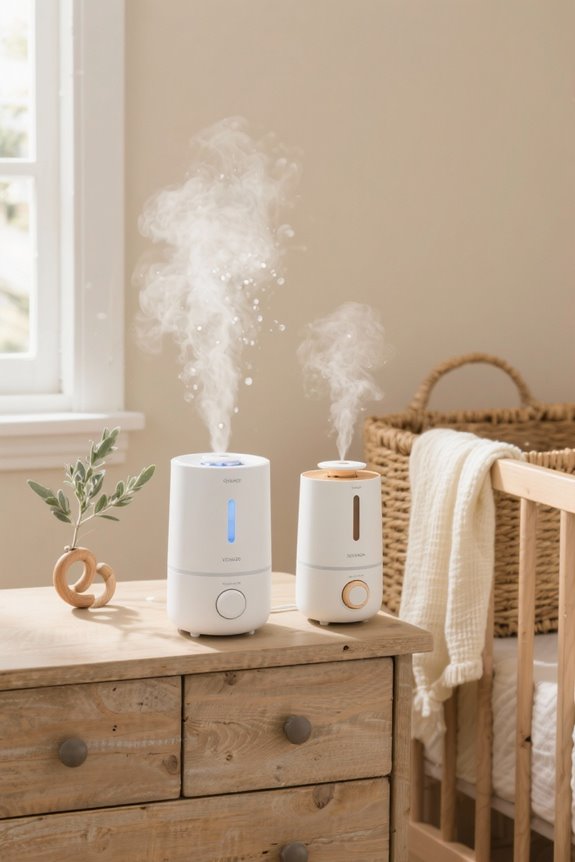
Choosing the right type of humidifier for a nursery involves understanding the differences between cool-mist and warm-mist options.
Cool-Mist Humidifiers
- Release a cool mist using ultrasonic vibrations or evaporation.
- Safe for babies, as they pose no burn risk.
- More energy-efficient and suitable for larger rooms.
- Regular cleaning is essential to prevent mold buildup.
Warm-Mist Humidifiers
- Heat water to produce steam, adding warmth.
- Typically comforting in cooler climates but pose warm mist risks due to potential burns from hot surfaces.
- Consume more energy and may require more maintenance.
- The boiling process reduces mineral dispersion but can still add white dust.
In general, cool mist benefits are often preferred for nursery settings due to safety and efficiency. Additionally, benefits of humidifiers for asthma can also be crucial for improving the overall air quality in a nursery environment.
Recommended Products

[3-in-1 Humidifier Meets All You Expect] Cool Mist Humidifier+Aromatherapy+Mood Light, purchase for once to satisfy all you expect! Let Homvana H101 be the best companion in your bedroom.

𝟰𝗟 𝗟𝗮𝗿𝗴𝗲 𝗧𝗮𝗻𝗸 𝗳𝗼𝗿 𝗖𝗼𝗻𝘁𝗶𝗻𝘂𝗼𝘂𝘀 𝗖𝗼𝗺𝗳𝗼𝗿𝘁: Enjoy quiet sleep without congestion, coughing, or dry mouth, DREO baby humidifier's ultrasonic atomization brings noise down to 28dB, while its 4L tank provides up to 36 hours of moisture without the need to refill.

𝐅𝐨𝐫𝐠𝐞𝐭 𝐚𝐛𝐨𝐮𝐭 𝐜𝐨𝐧𝐬𝐭𝐚𝐧𝐭 𝐫𝐞𝐟𝐢𝐥𝐥𝐬: With a 3L tank and convenient top-fill design, this humidifier large room for baby offers up to 30 hours of long run time humidification in sleep mode, ensuring dry air is no longer an issue for your family, plants, and baby.
Safety Considerations When Using Humidifiers
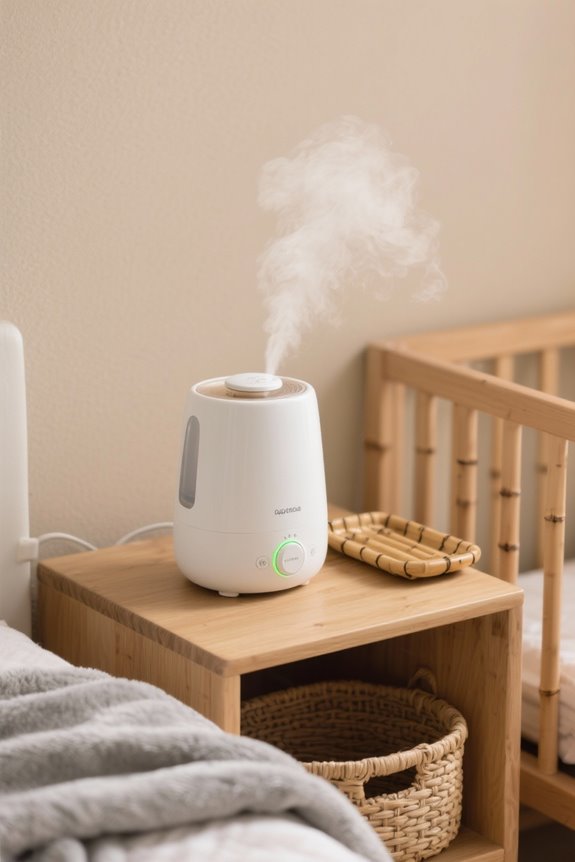
Guaranteeing safety while using humidifiers in nurseries is essential for the well-being of infants. Proper placement precautions and moisture management are critical to prevent potential hazards.
- Placement Precautions: Humidifiers should be positioned at least 3 to 4 feet from the crib, placed on stable surfaces, and out of the child’s reach. Avoid enclosed spaces to guarantee proper airflow.
- Moisture Management: Maintain humidity levels between 30-50% to minimize mold growth and respiratory issues. Use a hygrometer to monitor humidity regularly. Intermittent use helps manage moisture levels and prevents excessive condensation. Moreover, utilizing a humidifier with smart humidistat features can help maintain consistent humidity levels automatically.
Following these guidelines can enhance safety and create a comfortable environment for infants while using humidifiers.
Recommended Products
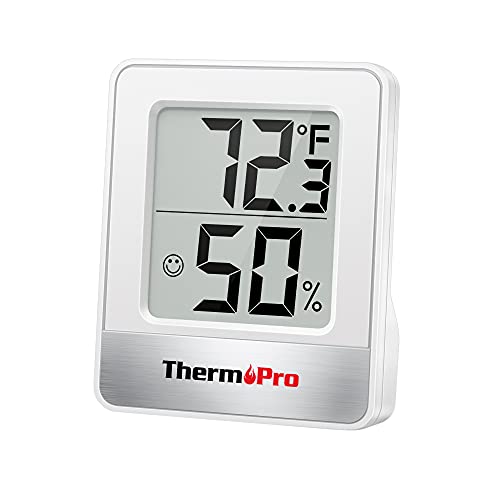
Face Icon Comfort Indicator: Humidity temperature gauge features face icons to indicate DRY/COMFORT/WET air conditions, quickly informs you how to adjust your humidifier or dehumidifier to achieve optimal comfort.

THE APP-CONTROLLED SMART HUMIDIFIER YOUR HOME NEEDS. Feel confident that your child’s room always has the ideal humidity level and help keep their throat and nasal passages hydrated with the Safety 1st Smart Humidifier. The touch display with humidity and temperature indicator allows you to monitor room temperature and humidity levels. This humidifier is part of the Connected Suite which puts parents in control of their child’s sleep atmosphere through our family-friendly, easy-to-use Safety 1st Connected App.

𝙎𝙖𝙮 𝙂𝙤𝙤𝙙𝙗𝙮𝙚 𝙩𝙤 𝘿𝙧𝙮 𝘿𝙖𝙮𝙨: This humidifier for large room emits a cool, 5 μm ultrafine mist up to 40 inch high thanks to dual inlets and a wide nozzle. Its 300 ml/hour output effectively combats dryness in rooms up to 500 sq ft, all while protecting furniture from humidity damage.
Cleaning and Maintenance Tips
Maintaining a clean and well-functioning humidifier is essential for promoting a healthy environment, especially in nurseries. To guarantee peak performance, adhere to specific cleaning frequency guidelines. Daily maintenance includes emptying and rinsing the water tank with warm water if used continuously. Every three days, a deep cleaning with vinegar or a disinfectant is recommended to prevent mold and bacteria accumulation. Weekly deep cleaning is necessary before reusing stored units or during periods of heavy use.
In terms of maintenance methods, utilize a vinegar solution for mineral buildup, and consider a bleach solution for sanitizing the tank. Incorporating these practices helps maintain hygiene, enhances air quality, and protects against respiratory issues, making the nursery a safer space for infants. Additionally, regular cleaning is vital for preventing mineral buildup and ensuring durability of the humidifier.
Recommended Products

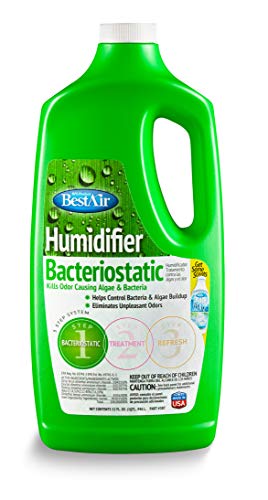
2 - 32 Ounce Bottles
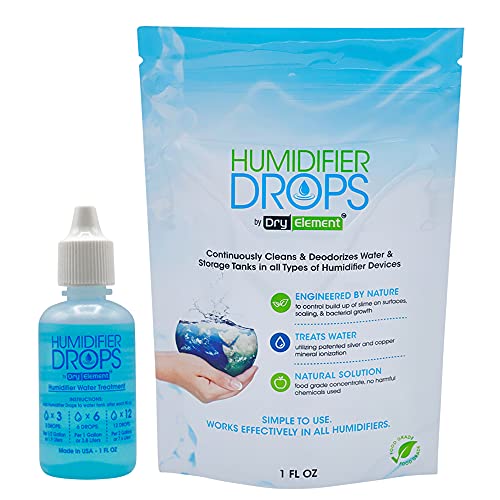
THE ORIGINAL FORMULA: We are the first and the only true authentic humidifier treatment solution on the market. We thank our customers for their trust and support.
Choosing the Right Humidifier for Your Nursery
Selecting the appropriate humidifier for a nursery involves considering various factors to guarantee a healthy environment for infants. Parents should prioritize safety and functionality when choosing a device.
- Types: Cool-mist humidifiers are preferred due to their safety, avoiding burn hazards. Ultrasonic models offer a whisper quiet design, producing fine mist without filters.
- Adjustable Settings: Humidifiers with adjustable settings can fine-tune moisture levels, adapting to changing conditions.
- Noise Levels: Consider noise, as ultrasonic options are less disruptive for sleep.
- Coverage Area: Confirm the humidifier matches the nursery size for peak performance. Additionally, optimal noise levels are crucial for maintaining a peaceful atmosphere conducive to restful sleep.
Recommended Products

A Must-Have For Parents: Help your children breathe easier throughout the night with this 2-in-1 cool mist humidifier and night light. Thoughtfully designed and rigorously tested, it’s perfect for your baby’s nursery, kid’s bedroom, or any space up to 250 sq ft where you need extra humidity.

𝗟𝗔𝗥𝗚𝗘 𝟯𝗟 𝗪𝗔𝗧𝗘𝗥 𝗧𝗔𝗡𝗞: Still be bothered by congestion, coughing, or dry mouth when sleeping? With a 25W power rating, the impressive 3-liter tank provides 25 hours of moisture, helping you sleep comfortably for 3 nights with one single refill.

Use as a cool mist humidifier, essential oil diffuser and night light: small humidifiers for bedrooms are an essential part of a good night’s sleep for better breathing and more comfortable sleep for the entire family
Optimal Humidity Levels for Infants
Ideal humidity levels play an essential role in creating a healthy nursery environment for infants. Most experts recommend maintaining humidity between 40% and 60%. This ideal humidity range helps reduce respiratory issues and skin problems, supporting overall infant health. The Environmental Protection Agency (EPA) endorses this humidity range for improved indoor air quality.
When humidity exceeds 60%, risks such as mold and dust mites increase. Conversely, levels below 30% may lead to dry skin and respiratory discomfort. Caregivers should use humidity measurement techniques, such as hygrometers, to monitor levels effectively. Keeping humidity balanced guarantees easier breathing and may prevent illnesses, therefore promoting better sleep and comfort for infants in the nursery. Additionally, ensuring ergonomic designs in furnishings can further enhance comfort and support the health needs of infants.
Monitoring Indoor Humidity
Monitoring indoor humidity is crucial for ensuring a comfortable and healthy nursery environment. Caregivers can use various sensor types to keep track of humidity levels effectively.
- Thermo-hygrometers combine temperature and humidity sensing for accuracy.
- Digital hygrometers offer precise readings and data tracking to monitor fluctuations.
- Smart Wi-Fi-enabled sensors provide real-time alerts to smartphones for adjustments when humidity is outside the safe range.
To achieve ideal nursery conditions, it is essential to place these devices at baby breathing level while avoiding locations near vents or windows. Consistent data tracking enables caregivers to identify patterns over time, ensuring that humidity remains within the perfect 40-60% range for an infant’s health and comfort. Having a germ-free humidifier in the nursery can further enhance air quality by eliminating harmful pathogens.
Seasonal Considerations for Humidifier Use
How does one adapt humidifier use according to seasonal changes? Seasonal adjustments are essential for ideal nursery humidity. In winter, cold air leads to dryness, requiring increased humidifier output to maintain necessary moisture levels. Forced-air heating can exacerbate this issue, making it imperative to monitor humidity closely.
In contrast, warmer months may present challenges of excess humidity. During spring and summer, utilizing humidifier types with adjustable settings or programmable features helps prevent over-humidification. Maintaining indoor humidity below 50% minimizes risks of mold and respiratory issues. Additionally, consider using a hygrometer to accurately track humidity levels in the nursery.
Regularly check humidity levels with a hygrometer and adjust the humidifier as seasons change, ensuring a healthy environment for infants. Frequent cleaning is important to maintain hygienic conditions within these devices throughout the year.
Impact on Sleep Quality for Infants
Maintaining appropriate humidity levels in a nursery can greatly impact infant sleep quality. Ideal humidity ranges from 40% to 60%, enhancing comfort and promoting better sleep dynamics. Humidifier functionality plays an essential role; these devices keep nasal passages and airways moist, reducing irritation and minimizing disruptive coughs during the night.
Infants in dry environments may experience discomfort, leading to frequent awakenings. Additionally, low humidity can exacerbate respiratory issues, interfering with restful sleep. Proper maintenance of humidifiers guarantees clean air delivery, vital for preserving sleep continuity.
Parents are encouraged to choose cool-mist humidifiers and regularly clean them to remove bacteria and mold, further enhancing overall air quality. Adjusting humidity alongside thermostat settings maximizes thermal comfort, supporting sounder sleep.
Addressing Potential Risks of Humidifier Use
When considering humidifier use in nurseries, it is important to recognize the potential risks that may accompany these devices.
- Bacterial and Fungal Contamination: Humidifiers can grow bacteria and mold if not cleaned regularly, affecting air quality. Contaminated mist may harm infants, especially those with allergies.
- Chemical Risks: Using improper cleaning agents can release harmful residues. Following manufacturer instructions is essential for safety.
- Mineral Particles: Ultrasonic humidifiers may aerosolize fine mineral particles, which can contain heavy metals. Using distilled water can curb this issue.
- Burn Hazards: Warm-mist humidifiers pose burn risks. Hence, cool-mist models are recommended for safe moisture delivery.
To maintain health, consistent maintenance and mold prevention practices are critical for any humidifier in a nursery setting.
Frequently Asked Questions
Can Humidifiers Help With Teething Discomfort in Infants?
Many doubt humidifiers’ effectiveness for teething discomfort, yet the right humidifier types can provide soothing humidity. This moisture aids teething relief by alleviating dry nasal passages, enhancing overall comfort during painful teething episodes.
How Do Humidifiers Affect Pet Health in Nurseries?
Humidifiers positively affect pet health in nurseries by maintaining ideal humidity levels, which alleviate pet allergies, soothe respiratory discomfort, and improve skin hydration, ultimately enhancing overall comfort and wellbeing for pets sharing the environment.
Are There Specific Humidifier Brands Recommended for Nurseries?
In the domain of nursery care, brand comparisons reveal that Levoit and Canopy stand out, both known for safety features like mold-inhibiting technology and whisper-quiet operation. These elements guarantee a nurturing atmosphere for infants.
Can I Use Essential Oils in My Humidifier?
Essential oils should not be used in humidifiers due to safety concerns for young children. Instead, diffuser alternatives provide a safer way to enjoy aromatherapy without the risks associated with essential oil safety in humidifiers.
What Are the Signs of Over-Humidification in a Nursery?
In a nursery resembling a tropical rainforest, over-humidification reveals itself through elevated humidity levels, persistent respiratory issues like coughing, nasal congestion, and visible mold growth, all indicating an unhealthy environment for the infants.