As an Amazon Associate, we earn from qualifying purchases. Some links on this site are affiliate links at no extra cost to you. Our recommendations are based on thorough research and editorial judgment.

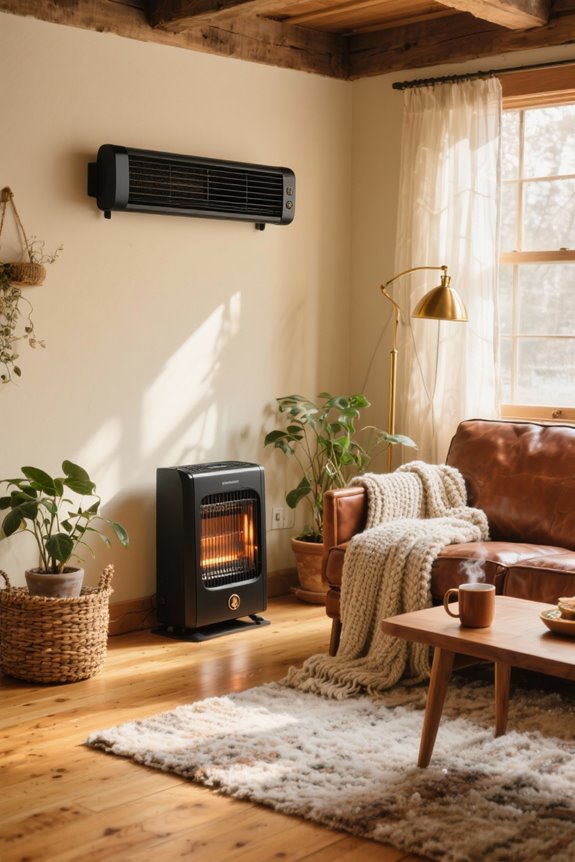
Radiant Vs Convection Heaters: Key Differences

Radiant and convection heaters differ primarily in heat transfer and efficiency. Radiant heaters provide instant warmth by directly warming objects and people, offering up to 90% energy conversion. In contrast, convection heaters warm the air gradually, with around 60% efficiency. Radiant systems are silent, improve air quality, and last longer, while convection units can create drafts and noise. Proper installation enhances effectiveness. Understanding these differences can help in choosing the right heating solution for specific needs. More insights are available for further guidance.
Key Takeaways
- Radiant heaters provide immediate, direct warmth to objects and people, whereas convection heaters gradually warm the air, leading to slower heating.
- Radiant heating has higher energy efficiency, converting up to 90% of energy into heat, compared to around 60% for convection heaters.
- Radiant systems operate silently and improve indoor air quality by reducing dust circulation, unlike convection heaters that can create noise and allergens.
- Installation of radiant heaters requires more setup, while convection heaters are often portable and easier to install.
- Radiant heaters typically have a longer lifespan of 10-35 years, compared to 15-25 years for convection models due to fewer moving parts.
Heat Transfer Mechanism
You may be interested


Best Heater For Basement Use: How To Select
November 6, 2025

Digital Thermostats For Space Heaters: How To Use
November 6, 2025
Heat transfer mechanisms play an essential role in how different heating systems operate effectively. Radiant heating primarily relies on radiant absorption, transferring heat through electromagnetic radiation, mainly infrared waves. This method heats objects and people directly, allowing immediate warmth without markedly warming the air between them. In contrast, convection heating depends on convective circulation. Warm air rises due to lower density and displaces cooler air, which creates circulation and distributes heat. However, this process is slower and less efficient due to air’s poor conductivity. It can lead to uneven temperature distribution, as warmer air collects near ceilings. Consequently, radiant and convection heating systems each have distinct modes of heat transfer that greatly impact their effectiveness in different spaces. Additionally, selecting a heater with safety features can enhance the overall effectiveness and user experience.
Energy Efficiency and Usage

When evaluating energy efficiency and usage, several factors distinguish radiant and convection heaters. Radiant heaters provide immediate, focused heat, resulting in shorter operation periods and increased energy savings. In contrast, convection heaters utilize more electricity over time due to longer run times needed to maintain space temperature.
Key points include:
- Heating Efficiency: Radiant systems are inherently more efficient as they heat objects directly.
- Usage Consideration: In poorly insulated areas, radiant heaters outperform convection units, minimizing heat loss.
- Operational Costs: Radiant systems often lead to lower operational expenses compared to convection systems, which tend to raise electricity bills. Additionally, energy-saving models can enhance overall efficiency by reducing energy consumption.
Ultimately, the choice between these heating methods depends on specific space heating needs and insulation quality.
Recommended Products

360° Whole-Home Warmth: DREO radiator heater delivers swift and silent heating at 1500W, boosting efficiency by 92.3%. Its 7 advanced fins outpace competitors by 39.49% in heat dispersion. Stay cozy with rapid, quiet, and even warmth.

Slim, Space-Saving Design for Any Room - This portable space heater for indoor use delivers targeted warmth where you need it most. The sleek, low-profile frame fits perfectly under your desk, beside your bed, or in your office, providing full-body comfort while saving space. Ideal for apartments, dorms, and small rooms, it’s the perfect heater for bedroom or workspace comfort.
Heat Distribution and Comfort
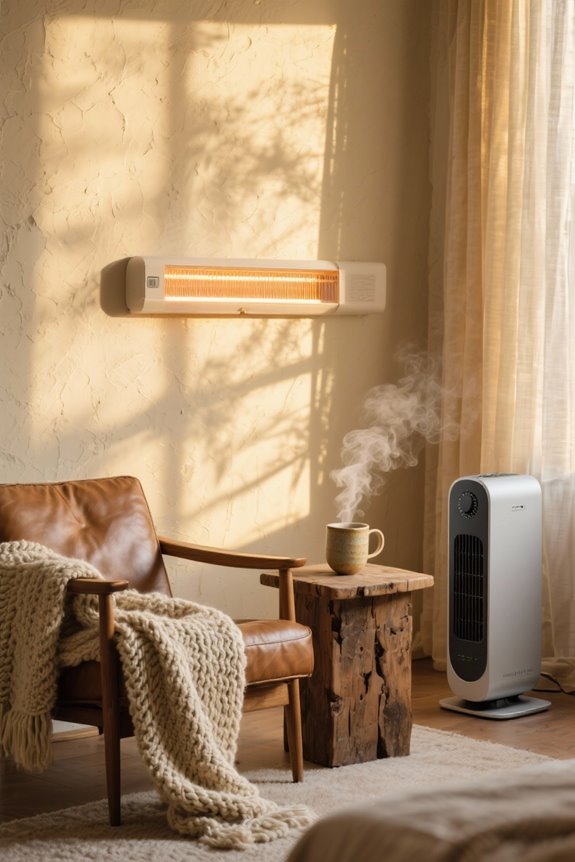
In considering the differences in heat distribution and comfort, radiant and convection heaters offer distinct advantages and limitations.
- Radiant Comfort: These heaters directly warm people and objects with infrared radiation. They provide immediate warmth, enhancing comfort with lower ambient temperatures. Radiant heaters create focused warmth in specific areas, minimizing drafts and allowing efficient energy use.
- Convection Comfort: In contrast, convection heaters warm the air, which can lead to uneven heat distribution. They distribute warmth gradually, often creating warm and cool zones within a room. While convection heating can effectively warm entire spaces, the reliance on air circulation may cause discomfort from drafts or noise. Additionally, safety features in heating systems are essential for reliable operation.
Ultimately, the choice depends on individual heating needs and preferences.
Speed of Heating
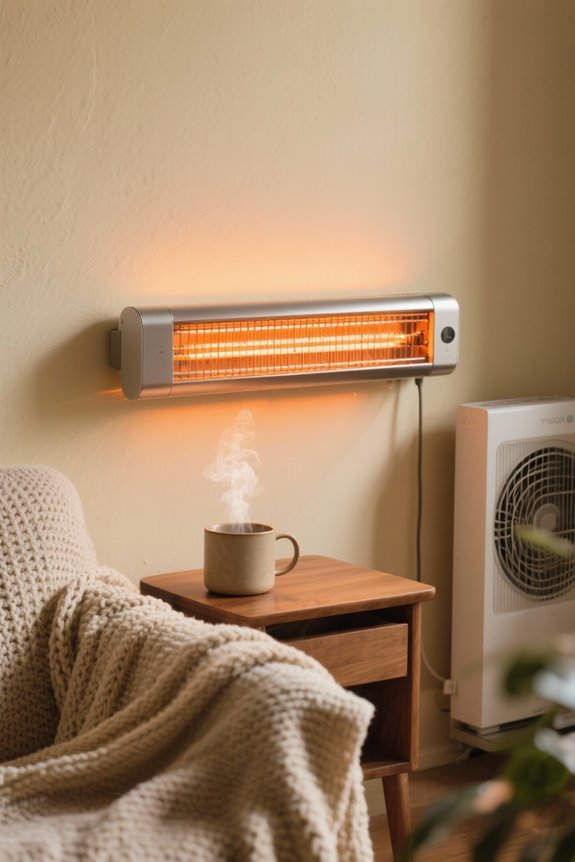
Understanding the speed of heating is essential for selecting the right heater for any space. Radiant heaters offer immediate warmth, achieving radiant effectiveness by heating objects and people directly. This makes them ideal for quick, intermittent heating needs, such as in a patio or small room.
In contrast, convection heaters have slower responsiveness, needing time to warm the surrounding air before noticeable effects occur. While they maintain a consistent temperature in larger areas over longer periods, they take longer to reach a desired temperature. This distinction highlights that radiant heaters are advantageous for brief heating sessions, whereas convection heaters excel in maintaining steady warmth in well-insulated environments. Both systems have their specific situational benefits, depending on individual heating requirements. Additionally, energy-efficient models like those offered by leading brands can help manage electricity consumption, making them practical choices for everyday use.
Installation and Positioning

Choosing the right installation method and positioning for heaters can greatly impact their effectiveness.
Installation Techniques:
- Radiant Heaters: These require significant preparation, such as subflooring and embedding mats or cables. Wall or ceiling panels need mounting brackets but should avoid water systems due to risks.
- Convection Heaters: Typically portable, these heaters can be plugged in anywhere. Some models are wall-mounted, necessitating more permanent installation.
Positioning Strategies:
- Radiant Heaters: Best placed near seating areas or rooms where warmth is needed most.
- Convection Heaters: Should be positioned centrally or near windows to promote air circulation while maintaining clear access for airflow.
Proper adherence to these installation techniques and positioning strategies guarantees ideal heater efficiency and effectiveness. Additionally, reflective insulation, such as US Energy Products Radiant Barrier Insulation, can greatly contribute to overall heating and cooling efficiency within a space.
Recommended Products

CUSTOMIZABLE HEATING OPTIONS: Choose from three settings to suit your needs - High (1500W), Low (900W), or Fan Only for air circulation without heat.

CUSTOMIZABLE HEATING OPTIONS: Choose from three settings to suit your needs - High (1500W), Low (900W), or Fan Only for air circulation without heat.

COMPACT DESIGN: Measuring just 5.87”D x 3.15”W x 5.95”H, this heater is ideal for tables, desks, or other small spaces, providing warmth without taking up much room.
Maintenance Requirements
Maintaining heaters, whether radiant or convection, is essential for guaranteeing ideal performance and longevity.
Cleaning Procedures
- Radiant: Requires regular cleaning of reflectors, vents, and burner ports with damp cloths or wire brushes. Annual cleaning of aluminum reflectors is vital.
- Convection: Focuses on cleaning air filters and fans to prevent dust buildup. Interior dusting of blowers is necessary.
Inspection Frequency
- Radiant: Involves annual checks of boilers, pipes, and pressure levels, as well as monitoring for unusual noises.
- Convection: Requires less frequent boiler inspections, emphasizing electrical connection checks and visible wear on components.
Regular maintenance helps guarantee that both heater types operate efficiently and safely, preventing potential problems before they escalate. Additionally, proper cleaning and safety features can enhance the overall performance and lifespan of your heater.
Environmental Impact
When evaluating the environmental impact of radiant and convection heaters, several key factors come into play.
- Energy Sourcing: Radiant heaters often use electricity, which can be sourced from renewable energy, helping to make them sustainable.
- Carbon Footprint: Generally, radiant heaters have a lower carbon footprint compared to convection heaters when powered by renewable electricity.
- Heat Loss Minimization: Radiant heaters directly warm objects, reducing heat loss and energy consumption.
- Efficiency: They are particularly efficient for targeted heating applications, lowering overall energy needs.
- Air Quality: Radiant heaters emit no pollutants at the point of use, unlike some convection options.
Adopting radiant heaters aligns with sustainability practices by conserving resources and decreasing reliance on fossil fuels.
Health Considerations
Health considerations play an essential role in selecting between radiant and convection heaters. Radiant heaters do not circulate air, which helps in allergen reduction, making them ideal for individuals with allergies or respiratory health issues. They maintain indoor air quality by preventing the spread of dust and airborne contaminants. In contrast, convection heaters stir up allergens through air circulation, potentially worsening conditions like asthma.
Key points include:
- Allergen Reduction: Radiant heaters avoid circulating allergens.
- Respiratory Health: They generate less respiratory irritation, as they do not dry air, unlike convection systems.
- Comfort: Radiant heaters promote an even warmth without drafts, enhancing comfort for vulnerable populations, including children and the elderly. Additionally, using battery-powered heated blankets can offer customizable warmth without contributing to indoor air issues.
Applications of Radiant Heaters
Recommended Products
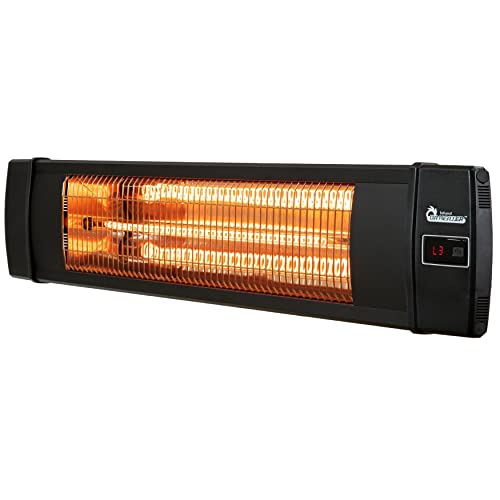
INDOOR and OUTDOOR HEATER - Heater is IP55 approved for both indoor and outdoor use - perfect for home, backyard, garages, open-air restaurant, outdoor patio or deck. Create a comfortable environment for both your indoor activities and outdoor recreation.

INSTANT WARMTH: Relax on cool days with our patio heaters for outdoor use, delivering sun-like, odorless heat in seconds—no gas or propane needed. Two heat levels and a remote control ensure immediate, convenient comfort.

Instant Heating: The infrared heater with high-efficiency infrared heating tubes heats up quickly in just 3 seconds, providing instant warmth without preheating. Ideal for cold winters, this electric infrared heater surrounds you with warmth immediately
Applications of Radiant Heaters
Radiant heaters find diverse applications across various sectors, demonstrating their versatility and effectiveness in both industrial and outdoor settings.
Industrial Applications
- Radiant heaters excel in large spaces, such as warehouses and manufacturing plants, where traditional heating struggles.
- They heat people and objects directly, enhancing comfort while cutting energy costs.
- Infrared technology enables rapid surface heating, essential in plastic processing for tasks like molding and drying.
Outdoor Heating
- Outdoor radiant heaters are perfect for patios and decks, providing warmth without needing air circulation.
- They perform well in wind-exposed areas, extending usability in cooler temperatures.
- Various models are available, including gas and electric options, catering to different needs and settings. Additionally, selecting models with energy-efficient settings can optimize their performance and reduce operational costs.
Applications of Convection Heaters
Convection heaters serve a wide range of applications, especially in industrial processes and facility heating. They are prominently used in:
- Industrial Processing: Essential for tempering, curing, and drying in manufacturing, ensuring temperature control for sensitive electronic components.
- Sector-Specific Heating: Employed in oil and gas for maintaining petrochemical viscosity and in healthcare for sterilizing medical tools.
- Industrial Facility Heating: Installed in warehouses and ships, designed for precise temperature control with robust, maintenance-free technology.
- Industrial Ovens: Provide uniform heating in batch processes, significant for industries like food, ceramics, and electronics.
Additionally, these heaters are known for energy efficiency ratings, allowing for optimal energy consumption while maintaining desired temperatures. These varied applications demonstrate the functionality of convection heaters, making them important for maintaining efficiency and quality in diverse industrial settings.
Recommended Products

【Uniform Heating】The maximum temperature can be set to 572 ° F (minimum 18 ° F higher than room temperature), suitable for various needs such as drying, heating, and reheating, etc. The air circulation promoted by natural convection, combined with a separate fan switch, makes the material dry faster and more evenly

【Specifically for Freeze Protection】AEGONAN electric pumphouse and utility heaters engineered for specifically for freeze protection. This heater ensure the uninterrupted functionality of critical equipment even in the harshest cold weather conditions. This heater is simple and reliable with no moving parts to wear out or maintain, can be run all winter long at remote locations, perfect for pump houses, utility rooms, relay stations, construction sheds, and more.
Cost Comparison
When evaluating heating options, the cost comparison between different systems is essential for making informed decisions. Convection heaters typically present lower installation costs, often up to 40% less than radiant heaters. This decreased cost is due to their simpler installation processes, while radiant systems require more complex setup.
Operating costs also reflect energy efficiency. Radiant heaters convert up to 90% of energy into heat, outperforming convection units, which convert around 60%. As a result, radiant systems lower ongoing energy bills. Additionally, various models of heaters feature energy efficiency attributes that cater to consumer needs and preferences.
Maintenance expenses also vary. Radiant heating generally has lower maintenance needs, while convection systems may incur more operational costs over time. Thus, understanding these cost estimations and market trends supports effective decision-making for consumers.
Recommended Products

𝑭𝒂𝒔𝒕 𝑯𝒆𝒂𝒕𝒊𝒏𝒈, 𝑳𝒂𝒔𝒕𝒊𝒏𝒈 𝑪𝒐𝒎𝒇𝒐𝒓𝒕: The 1500W power heats the whole house rapidly and the hot air circulation delivers long-lasting and gentle warmth which avoids dryness in winter, making PELONIS oil heater your best choice

Infrared Heat: Infrared radiant tower heater is compact but powerful and heats up quickly. Uses dual quartz tubes with integrated fan to disperse heat for any home or office environment.

𝑭𝒂𝒔𝒕 𝑯𝒆𝒂𝒕𝒊𝒏𝒈, 𝑳𝒂𝒔𝒕𝒊𝒏𝒈 𝑪𝒐𝒎𝒇𝒐𝒓𝒕: The 1500W power heats the whole house rapidly and the hot air circulation delivers long-lasting and gentle warmth which avoids dryness in winter, making PELONIS oil heater your best choice
Lifespan and Durability
Heating systems differ considerably regarding lifespan and durability, impacting long-term value and reliability.
- Lifespan Comparison: Radiant heaters typically last 10–20 years longer than convection heaters. Radiant systems can reach up to 35 years with proper care, while convection heaters usually last 15 to 25 years.
- Durability Factors: Radiant heaters benefit from fewer moving parts, reducing the risk of mechanical failure. Their fixed heating elements are less prone to wear. In contrast, convection heaters often have fans and motors that can wear out and require maintenance.
- Regular maintenance for convection units, such as cleaning filters, can enhance performance and lifespan. For radiant systems, minimal upkeep is needed, further contributing to their overall durability and reliability.
User Experience and Comfort
User experience and comfort are significant considerations when choosing between radiant and convection heaters. Radiant heaters offer immediate warmth by directly heating people and objects, enhancing thermal comfort. This approach is appealing for users who prefer targeted warmth in specific areas, making it advantageous for seated or stationary use. In contrast, convection heaters warm the air first, resulting in uneven heat distribution and delayed comfort.
Key differences include:
- Heat Delivery Speed: Radiant heat is instant, while convection takes time to warm the air.
- Noise Levels: Radiant heaters operate silently, supporting a peaceful environment, unlike noisy convection systems with fans.
- Air Quality: Radiant heaters minimize dust circulation, promoting healthier indoor air, aligning with user preferences for a cleaner atmosphere.
Ideal Situations for Each Type
Radiant and convection heaters are often suited to specific environments and needs, making the choice between them essential.
Ideal Situations for Radiant Heaters****
- Works effectively in large, open areas or spaces with high air movement.
- Provides even heat in garages, workshops, and basements.
- Offers high heating efficiency by warming objects directly, making it suitable for quickly heated, low-maintenance spaces.
Ideal Situations for Convection Heaters
- Best used in enclosed, well-insulated areas for steady heating.
- Suitable for small rooms where heated air circulates efficiently.
- Cost-effective option for residential use and temporary heating needs.
Choosing the right type depends on specific requirements, ensuring excellent heating efficiency and comfort in varied environments.
Frequently Asked Questions
Can Radiant Heaters Be Used Outdoors Effectively?
Yes, radiant heaters can be used effectively outdoors, providing immediate warmth without air reliance. Their portable options make them ideal for various outdoor settings, ensuring comfort even in breezy conditions where traditional heating methods may falter.
How Do I Choose the Right Size Heater?
To choose the right size heater, one must assess heater capacity based on room dimensions, calculate square footage and volume, factor in insulation quality, and apply a safety margin for efficiency and comfort.
Do Radiant Heaters Require Special Electrical Outlets?
Radiant heaters require specialized electrical outlet requirements, akin to a racecar needing a unique fuel type for enhanced efficiency. Compliance with NEC regulations guarantees safety and optimizes radiant heater efficiency, safeguarding against potential hazards during operation.
Can I Install Radiant Heating Under Existing Floors?
Yes, radiant heating can be installed under existing floors. However, proper underfloor installation techniques and insulation are essential to enhance heating efficiency and prevent heat loss, ensuring ideal performance in the living space above.
Are There Any Safety Concerns With Radiant Heaters?
Safety concerns with radiant heaters include overheating risks and potential fire hazards. Users must guarantee proper placement and maintenance to minimize these risks while enjoying the efficient, direct heating offered by radiant heating systems.