As an Amazon Associate, we earn from qualifying purchases. Some links on this site are affiliate links at no extra cost to you. Our recommendations are based on thorough research and editorial judgment.


Child Safe Heater Features

Child-safe heater features focus on protecting children and pets from hazards. Key elements include:
- Safety Mechanisms: Overheat protection, tip-over switches, and cool touch surfaces.
- Controlled Heat Output: Thermostatic controls and timers for safety.
- Installation Safety: Maintain three feet clearance from flammable items and mount heaters out of reach.
Certifications guarantee compliance with safety standards, minimizing risks. Regular maintenance, including cleaning and inspection, enhances safety. Understanding these features can help in selecting the right heater for your home. More details follow.
Key Takeaways
- Overheat protection and tip-over switches ensure the heater automatically shuts off in emergencies, minimizing fire and burn risks for children.
- Child-proof designs include out-of-reach controls and lockable covers to prevent accidental operation by kids.
- Maintain a minimum three-foot clearance around heaters to promote safety and proper airflow, reducing fire hazards.
- Select heaters with thermostatic control and heat output limitations to maintain safe operating temperatures and improve energy efficiency.
- Choose certified heating units with ETL approval, ensuring compliance with rigorous safety standards to protect against hazards.
Safety Clearance Around Heaters
When considering the safety of young children around heaters, maintaining an adequate safety clearance is vital. Proper spacing around heat sources minimizes the risk of burns or other accidents. It is recommended to keep a minimum of three feet between heaters and furniture or toys.
Child supervision is critical when using heaters, as children are naturally curious and may approach heat sources. Parents should set clear boundaries about staying away from heaters and explain the possible dangers.
Additionally, using barriers or safety gates can provide an extra layer of protection. Regularly checking the area around heaters helps guarantee they remain clear of obstacles. Overall, vigilance and proactive measures greatly contribute to a safer environment for children around heaters. Parents should also consider the safety features of space heaters, such as tip-over and overheat protection, to enhance the security of their home.
Controlled Heat Output
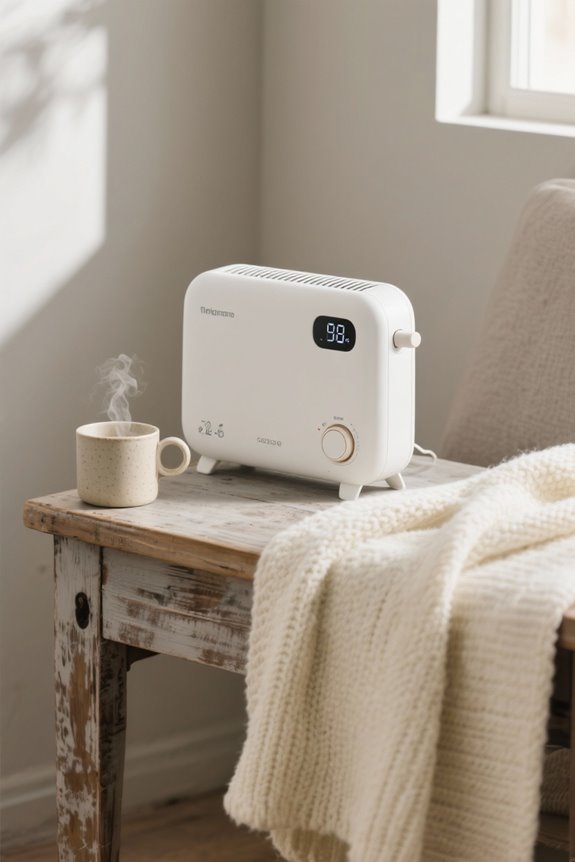
In order to guarantee the safety of children around heaters, controlled heat output is essential. This feature guarantees that heaters maintain a steady warmth, safeguarding against burns and overheating. Key elements include:
- Thermostatic Control: Automatically cycles the heater on and off to maintain a desired room temperature, enhancing heat management.
- Multi-Level Heat Settings: Offers adjustable outputs, allowing users to select low, medium, or high settings, which promotes energy efficiency.
- Heat Output Limitation: Incorporates technologies that cap maximum wattage and prevent rapid temperature increases, reducing fire hazards.
- Timers and Auto-Off Functions: Enable pre-set heating durations, guaranteeing the heater stops when unattended.
These components work together to create a safer environment while optimizing energy usage, guaranteeing that children are protected from heat-related risks. Additionally, implementing safety features such as overheat protection and tip-over protection further enhances child safety.
Essential Device Design Features
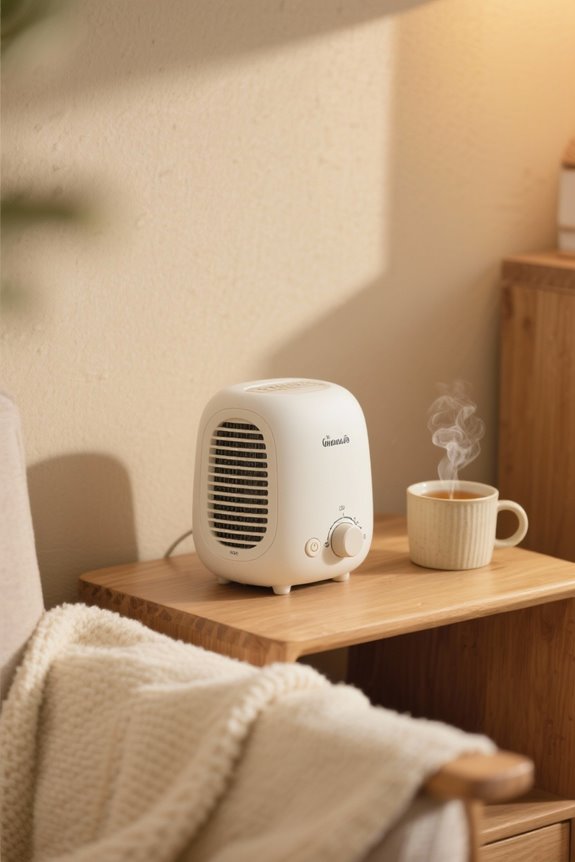
Essential device design features play a crucial role in guaranteeing the safety of children around heaters. Key characteristics include:
- Cool Touch Technology: This feature keeps the exterior of the heater at a safe temperature, preventing burns from accidental contact. It is increasingly common in child-safe models.
- Child Safe Controls: Control panels are equipped with locks to deter children from changing settings. This guarantees that the heater remains at a safe temperature.
Additional features such as tip-over and overheat protection enhance safety by automatically shutting off the heater if it is tipped or if internal temperatures rise dangerously. Together, these design aspects create a more secure environment, giving caregivers peace of mind while using heaters in homes with children. Moreover, the importance of selecting heaters with robust safety features cannot be overstated, especially in households with young ones.
Installation Options for Safety
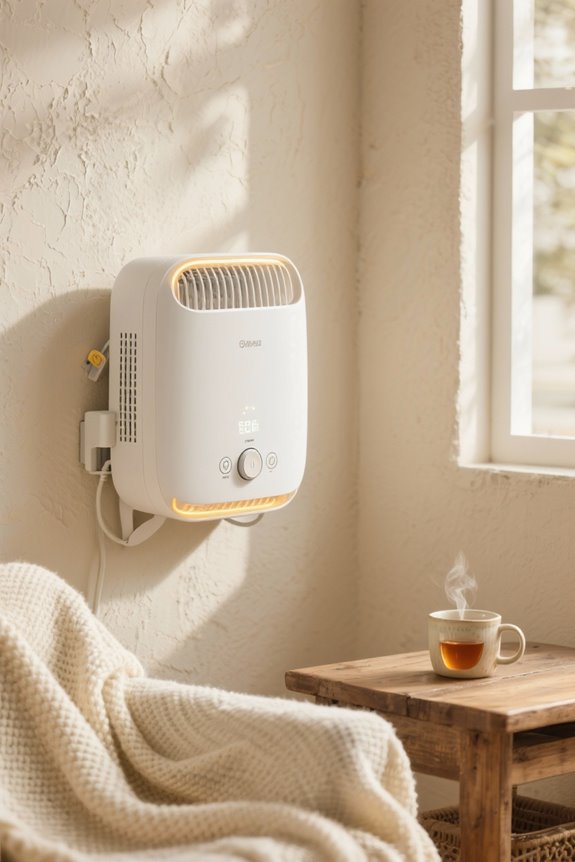
Proper installation of heaters is essential for maintaining safety, especially in homes with children. Placing heaters out of reach is important to prevent accidental contact. Wall mounting options are particularly safe, as they elevate the heater and minimize the risk of tipping.
Key considerations for heater placement include:
- Installing at a height inaccessible to kids and pets.
- Positioning heaters in areas difficult for children to access.
- Confirming a minimum of three feet of clearance around heaters for proper airflow.
- Utilizing sturdy surfaces that can support the heater securely.
Additionally, it is critical to surround heaters with non-combustible materials and guarantee they are located away from flammable items. Regular checks and monitoring can further enhance safety. Furthermore, ensuring that your heater is equipped with safety features such as tip-over protection can provide extra peace of mind.
Importance of Certification
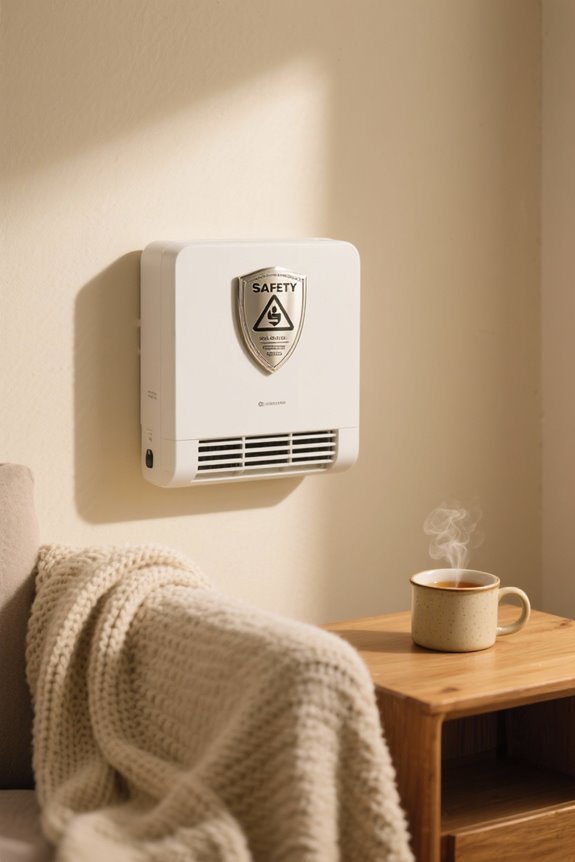
When selecting a heater for a home, understanding the importance of certification greatly contributes to safety, especially in environments with children. Certification benefits include compliance with strict safety standards that protect against hazards like fire and electrical malfunctions. The certification process involves third-party testing to guarantee products meet necessary safety requirements.
Key points about certification include:
- Certified heaters guarantee adherence to fire safety regulations, essential in childcare settings.
- They often feature safety mechanisms, like shut-off switches, to prevent accidents.
- Products without valid certification can pose significant risks to families.
- Choosing heaters with ETL approval ensures reliability and safety in your household.
Safety Precautions for Children and Pets
Ensuring safety around heaters requires careful attention to both placement and features, particularly in homes with children and pets. Key safety precautions include:
- Heater Placement: Maintain a three-foot clearance from children, pets, and flammable materials. Avoid high-traffic areas to prevent tipping.
- Built-in Safety Features: Select heaters with tip-over protection and cool-to-touch surfaces to minimize burn risks.
- Physical Barriers: Install protective barriers to deter access while ensuring heat flow.
- Supervision and Usage Habits: Never leave heaters unattended. Turn off portable units when not in use.
- Child Education: Teach children about heater dangers, modeling appropriate heating habits to promote safety awareness.
These strategies contribute to a safer environment for both children and pets, minimizing risks associated with heaters.
Design Features for Enhanced Safety
Design features for enhanced safety in heaters play a significant role in creating a secure environment for homes with children. Effective design considerations include:
- Automatic Shut-Off Sensors: These include tip-over protection, overheat sensors, and motion detectors, which all enhance safety by preventing accidents.
- Safe Heat Distribution: Oil-filled radiators and infrared heating provide warmth without exposed hot surfaces, reducing burn risks.
- Structural Safety Enhancements: Features like stable bases and tamper-resistant grills help avoid injuries and accidents, promoting child safety.
- User Controls: Remote or app controls and programmable timers guarantee that heaters operate under adult supervision, maintaining safe usage.
Additionally, incorporating safety certifications such as ETL can further assure parents that the heater complies with rigorous safety standards.
These safety innovations collectively create a safer atmosphere, allowing families to rely on effective heating without constant worry.
Adhering to Safety Standards and Certifications
Child safety hinges on the adherence to established safety standards and certifications for heaters. Certification agencies like Underwriters Laboratories (UL), the Canadian Standards Association (CSA), and Intertek (ETL) guarantee heaters meet rigorous certification criteria, emphasizing safety compliance.
Key features include:
- Tip-over automatic shutoff: Powers down the heater when tipped, reducing fire risks.
- Overheat protection: Turns off the heater at unsafe temperatures, preventing burns.
- Temperature limits: Controls external surface temperatures to prevent burns, with some heaters caps at 145°F.
- Child-proof designs: Controls and thermostats are out of reach or have lockable covers.
These compliance standards focus on minimizing fire and burn hazards, making adherence to safety certifications vital for child-safe heating solutions. Additionally, many modern heaters, such as the electric fireplace heaters mentioned, come equipped with features like child locks for added safety.
Operating and Maintenance Safety Practices
When operating and maintaining heaters, it is essential to follow established safety practices to minimize risks for children and pets. Implementing proper operational protocols includes:
- Keeping heaters out of children’s reach, ideally mounted at least 72 inches high.
- Maintaining safe clearance around heaters to prevent fire hazards.
- Using units with safety features such as tip-over switches and overheat protection.
Regular heater monitoring is vital. Check cords and components for damage and perform routine cleanings to prevent build-up.
Never leave portable heaters unattended, especially around children or pets. Follow manufacturer guidelines closely, including placement and usage instructions. It is crucial to select heaters with appropriate safety features importance to ensure optimal protection against accidents.
Ultimately, consistent inspection and adherence to safety techniques foster a safer environment while utilizing heating devices in the home.
Frequently Asked Questions
What Types of Heaters Are Safest for Children and Pets?
Electric small space heaters and ceramic heaters are generally safer for children and pets. Implementing safety tips like keeping heaters away from flammable materials and monitoring usage can further enhance safety in the environment.
Can I Leave Heaters Unattended for Short Periods?
Heater safety should always supersede short-term convenience; unattended use increases the potential for perilous situations. It’s prudent to avoid leaving heaters alone, even briefly, ensuring safety for all, particularly vulnerable individuals like children and pets.
How Often Should I Replace My Heater?
Replacement timelines for heaters typically range from 8 to 20 years, depending on type and maintenance. Regular heater maintenance is essential to identify potential issues early, ensuring timely replacement and preventing costly breakdowns and inefficiencies.
Are Portable Heaters as Safe as Fixed Heaters?
Portable heaters present heightened risks regarding safety, particularly for children, while fixed heaters offer significant advantages, including stable installation and protective barriers. This juxtaposition highlights the critical considerations for safe heating options in households.
What Should I Do if My Heater Overheats?
If a heater overheats, one should immediately turn it off and unplug it, move it away from flammable materials, and implement safety measures while waiting for it to cool down. Seek professional inspection before further use.


